





Construction is disruptive and costly — there is no denying it. While a client will experience inevitable challenges and inconveniences to their operations during construction, construction managers can take specific steps to minimize the negative impacts and to help businesses remain operational during a project.
Phasing a project, undertaking work in distinctly defined areas, and focusing on proactive, consistent communication with the client can lessen the impact of construction. Proactively considering the client’s perspective and developing an approach that gets the job done while also keeping the client fully operational can deliver results in terms of a streamlined project and satisfied client.
Plan the Work & Phase Strategically
Renovating auto dealerships provides an example of how a carefully phased project can help clients continue to run their business while the project is underway. Auto brands require that dealers upgrade their facilities periodically (roughly every 10 years) to reflect the auto maker’s refreshed brand image. While doing an image upgrade, dealers also frequently take the opportunity to renovate or expand their service facilities.
The major challenge that auto dealers face while managing image upgrades and service area renovations is how to keep customer needs met and maintain sales momentum at their dealerships. After years of designing, building and renovating dealerships, REDCOM has a few tips for managing construction while keeping the business operating onsite.
Carefully Planning an Approach
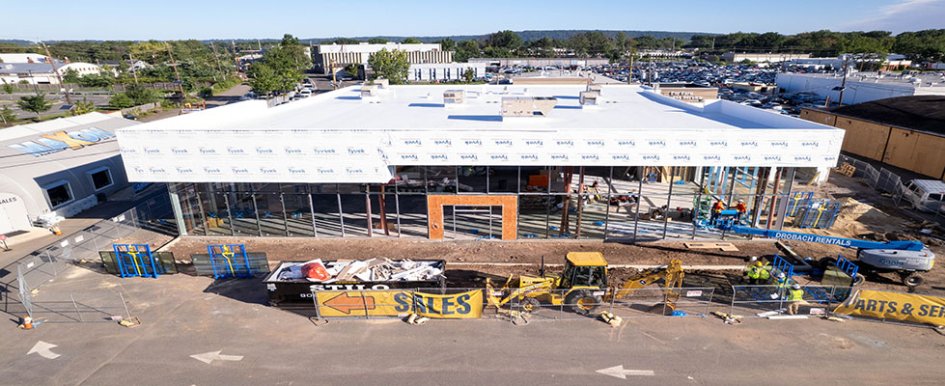
Renovating a dealership while keeping it open is logistically complex. Phasing the project — conducting work sequentially in well-defined stages — and working in distinct areas one at a time can successfully maintain a client’s operations. REDCOM recently completed a phased auto project in New Jersey that involved demolishing and rebuilding a high-volume dealer’s showroom and renovating its service building.
The project was completed in a compressed time frame while the dealer continued to run its business on-site in a busy, high-density commercial area. The dealer had several independent businesses leasing space and operating at the back of the property which added to the complexity of the project. These businesses needed uninterrupted access to their buildings during the duration of the project. Complicating matters further was the aggressive project time frame — only 11 months.
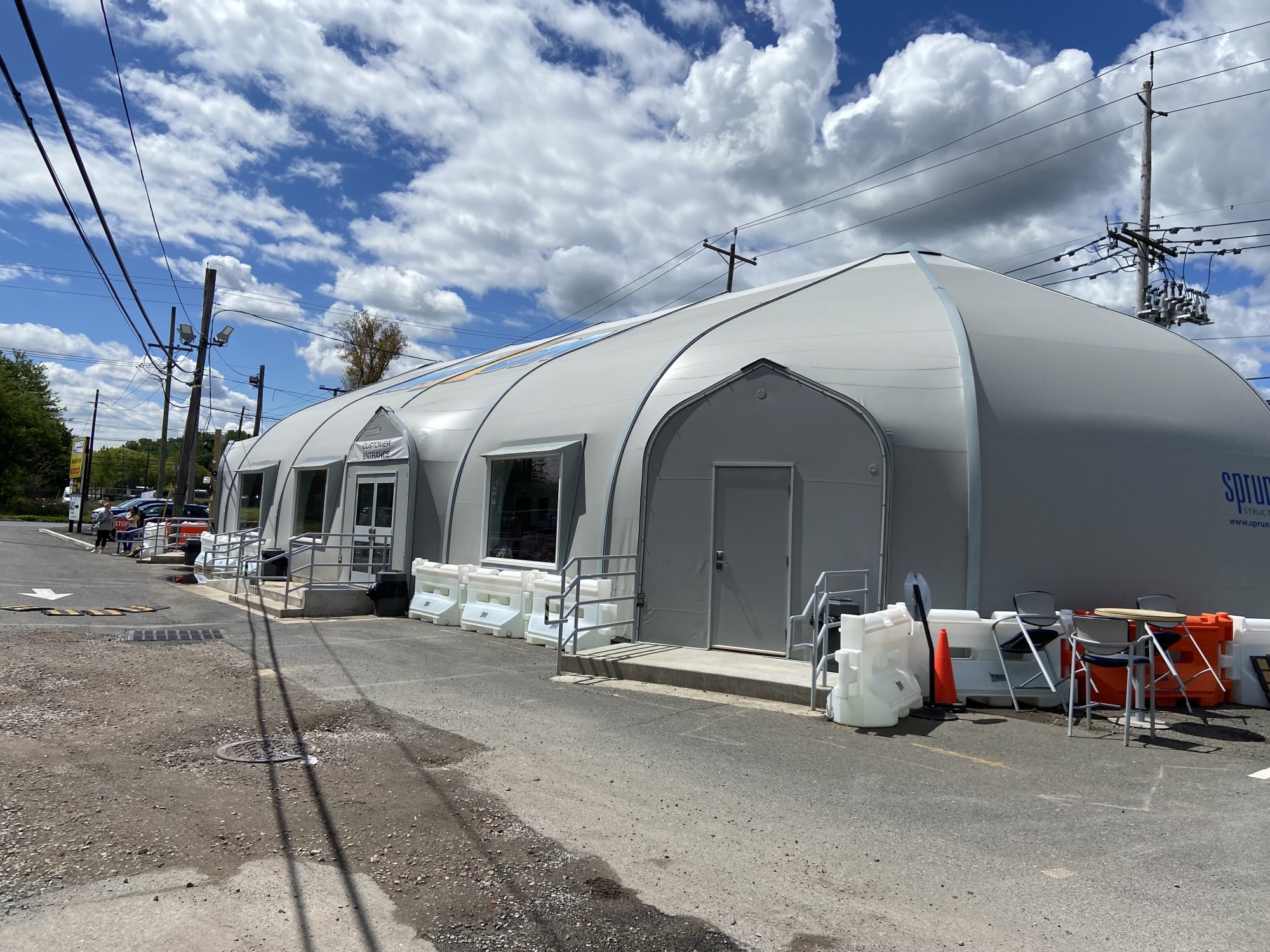
REDCOM partnered with the client to carefully plan how to approach the project. First, the client erected and powered a vinyl and canvas structure onsite to serve as a temporary showroom. REDCOM then demolished the existing showroom and started ground-up construction of the new building. REDCOM started renovation of the service area in tandem with the showroom.
The scope of work in the service shop included updating the electrical system and the fire suppression system, opening a wall and adding overhead doors to create new service bays with new lifts, and putting on a new roof. To maintain service operations, work progressed one area at a time. The team worked in discrete steps with a narrow scope, such as moving and installing only four lifts at a time so the dealer could maintain adequate service capacity.
The service shop had been expanded over the years, and the additional bays stretched the electrical service to its capacity. Because all wiring needed to be replaced, REDCOM provided backup power and performed work at off-peak times with construction crews working nights and weekends to minimize disruption. The team was able to complete the service area section by section, maintaining nearly 100% servicing capacity.
Keep Traffic Flowing
Construction sites are busy, dangerous places, and auto dealerships are no exception. Crews need space to work and store materials while customer traffic continues. At dealerships, inventory arrives and needs to be parked while heavy equipment moves around the site. A well-planned traffic plan minimizes the risk of accidents and ensures that the dealership functions smoothly.
At this dealership, the site superintendent, project manager and dealership managers collaborated to develop a carefully planned traffic flow that met the needs of the dealership and its customers while accommodating the construction. The density of the area and the long, narrow nature of the site flanked by other businesses made constructing this plan challenging.
Communicate Constantly
Organizing customers, employees and construction crews in a limited area is not an easy task. Consistent communication at all levels is the key for a project to run smoothly, supported by respectful relationships with the client and its staff. In the case of the car dealership, the site supervisor had daily interactions with sales and service managers, parts managers and technicians, updating them constantly on the schedule and the logistics of completing the construction work. The super also kept the businesses at the back of the property informed of what would be happening so that their operations were not negatively impacted by the construction.
After hours, the client’s managers had access to the site super and assistant site super for any construction-related issues. The super’s transparent daily check-ins ensured that there were never any surprises and strengthened the trust and partnership between the dealership staff and construction team. (The site super got to know the dealership staff so well that they surprised him with a cake on his birthday.)
Besides the daily updates, structured weekly meetings supported the project. The site super also held a group meeting every week with the client’s managers to get feedback on the planned work and to discuss how REDCOM could minimize disruption to their operations and maintain safe access for the public. When needed, REDCOM adapted its plans to meet the needs of the dealership, such as accommodating a shipment of cars arriving. The REDCOM project manager also had a weekly meeting with the business owners to discuss project status and to get their input as needed. (A structured monthly meeting can also be effective, depending upon the nature of the project and the owner’s preference.)
Practices Consistently Applied
Delivering quality projects is a baseline expectation of construction business owners. A few best practices, consistently applied, can elevate project success, increase client satisfaction and deliver additional value. Practices such as carefully planning project work in phases or in specific areas with client input and developing a thoughtful traffic plan for the flow of people and materials around the site can help a client remain operational during construction.
Transparent communications between the construction team and the building owner and staff builds trust and can streamline logistics. These careful client-centered practices can pay off with a smoothly executed project and strong relationships.