
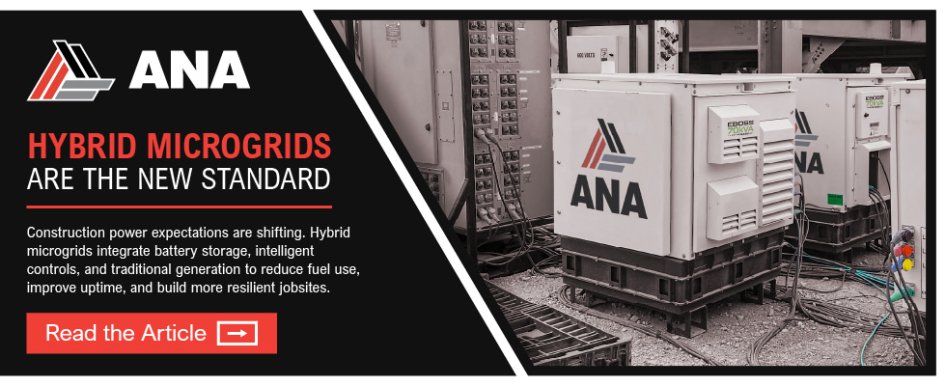


Hybrid microgrids are redefining how construction sites generate and manage power. By integrating battery storage, intelligent controls, and traditional generation, these systems help reduce fuel consumption, lower emissions, and improve uptime across demanding projects. As jobsites grow more complex and sustainability requirements increase, contractors need scalable, flexible power solutions that can adapt in real time. Hybrid microgrids are increasingly meeting that need, helping teams improve efficiency, reduce operational risk, and advance the Journey to Zero.
Power challenges are no longer a future concern for construction, industrial, and commercial projects—they are happening now. Utility delays, grid congestion, extreme weather, and rising fuel and emissions pressures are forcing project teams to rethink how power is planned, deployed, and scaled. In response, hybrid microgrids are emerging as a practical and resilient solution.
This article explores how hybrid microgrid systems are reshaping the way facilities are powered, from the earliest stages of construction through full operational maturity. It examines what a microgrid really is, how hybrid generation works in real-world applications, and why battery-integrated systems are increasingly becoming the foundation for modern power strategies.
Through real-world examples and comparisons, the discussion highlights the differences between traditional grid dependence and hybrid microgrid approaches. It also explores how projects can transition from temporary rental power during construction to permanent, scalable energy infrastructure—without the need to rip out and replace equipment along the way.
Several key themes are central to the conversation. First, understanding what defines a microgrid and how it differs from traditional power models is critical as organizations rethink their energy strategies. Hybrid generators also play a major role, reducing fuel consumption, runtime, and maintenance requirements while improving overall efficiency.
Battery technology is another important factor. The chemistry used in battery storage systems can significantly impact safety, longevity, and total cost of ownership. As these systems mature, they are increasingly capable of scaling from temporary construction power to fully deployed microgrid solutions that support long-term operations.
Finally, resilient system design requires an integrated approach. Hybrid microgrids bring together solar power, utility connections, generators, and battery storage to create a flexible energy ecosystem that can adapt to changing power demands.
For professionals involved in construction, utilities, emergency power, industrial facilities, or any project facing power constraints, understanding these developments is becoming essential. Hybrid microgrids are quickly becoming the new baseline for reliable, efficient power infrastructure.
👉 Watch a full webinar here