Transforming a Warehouse With a Sinking Slab Into a Solid Success
How REDCOM Design & Construction navigated a complicated project process
A slab of a warehouse in Secaucus, New Jersey, owned by a national real estate investment advisor and operator was cracking, indicating the presence of significant structural issues that threatened the future operations of the warehouse. To address the problem, the owner assembled a team with Langan Engineering, architect Bilow Garrett Group, and REDCOM Design & Construction for construction management. Working collaboratively, the team evaluated remediation options and determined the engineering and construction required to stabilize the warehouse and prepare it for tenancy. This case study underscores the value of collaboration, a culture that encourages open dialogue and the benefit of owner/decision-maker engagement during the project process.
Property Overview
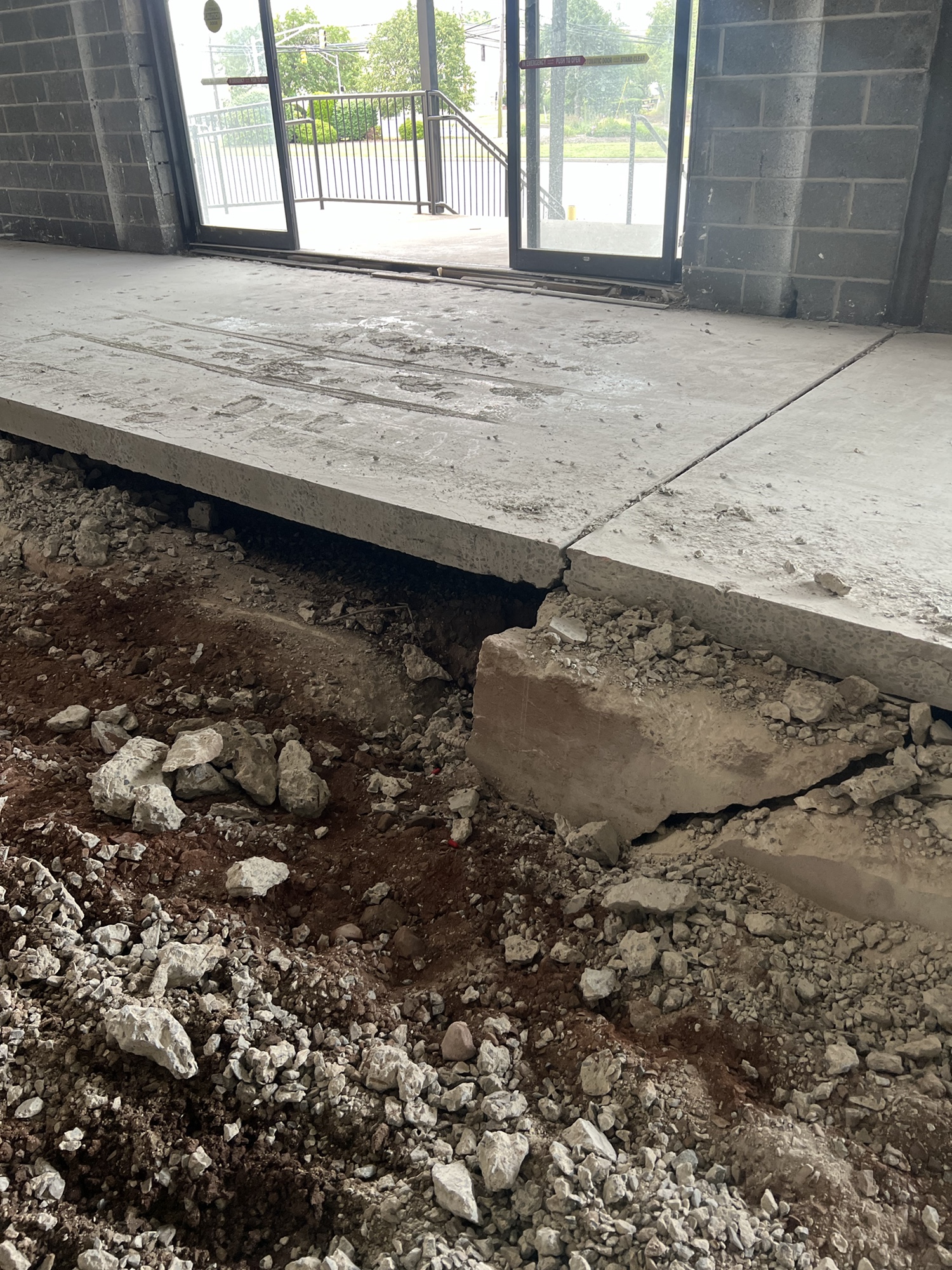
The 148,000-square-foot building was erected in 1980 on a site with inadequate soil conditions to support the building’s weight. Initial tests by Langan Engineering found that the original support grade beams were cracking and that the soil had sunk 8–10 inches beneath the slab. The slab was elevated off the ground and was being held up by the piles and the failing grade beams. As a result, the warehouse floor was caving in.
Project Challenges
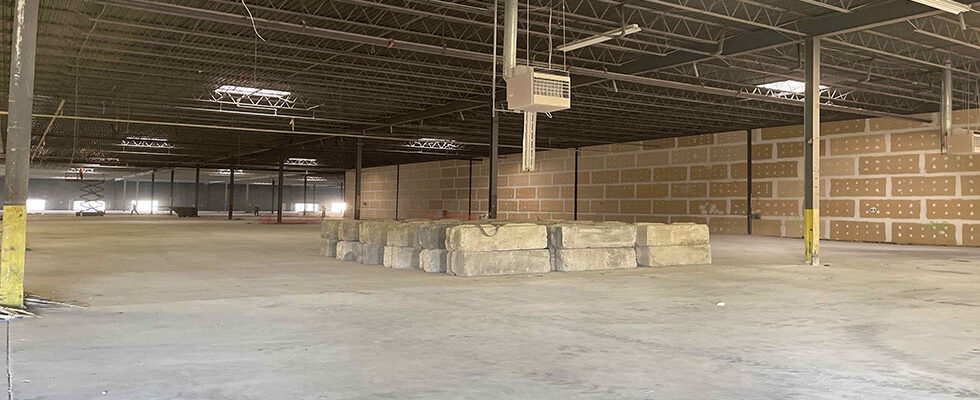
To get the warehouse back to full operational capacity, the structure required that the slab be able to support a weight of 250 pounds per square inch. Langan performed load testing using large concrete blocks to determine the weight-bearing capacity and deflection of the existing slab floor.
Langan stacked the blocks in the building and left them there for two weeks. The team took measurements before and after the block placement to see how much the slab moved. The areas of slab that supported the weight were left alone. The slab in areas that showed significant movement and an inability to hold weight was removed so the underlying ground could be treated. The slab was cut out, ground in a crusher and placed on top of the areas where the soil had sunk. This saved disposal and hauling fees and provided material to fill the voids.
Remediation Approach
The next step was to determine how to correct the soil structure so that new slab could be placed over it. Through joint discussions, the collective team of Langan, Bilow Garrett Group and REDCOM evaluated more than 15 potential solutions. By combining structural expertise with practical construction insights and cost considerations, the team narrowed the list down to the two most viable options.
Option 1: Foam to Raise the Floor Back to Elevation
The team’s initial approach to remediation was fortifying the ground, which involved injecting foam under the slab to support the existing structure, filling in the space where the ground had sunk. This plan had several advantages. It was straightforward, minimally invasive and relatively quick to implement. Minimizing client downtime during any project is a primary consideration, and REDCOM viewed the efficiency of this option as a key benefit.
If the soil had enough strength, the injected foam would push the ground down and the concrete up. REDCOM injected the foam. It worked for a while but had settled by the next morning. The force of the foam had moved the soil down instead of the slab up, indicating that the soil was still too soft to provide an adequate base for the warehouse. The team regrouped, shared findings and determined that a more durable solution was required.
REDCOM completed a cost analysis of pile types and options.
Enter the helical pile.
Option 2: Piles & Plates
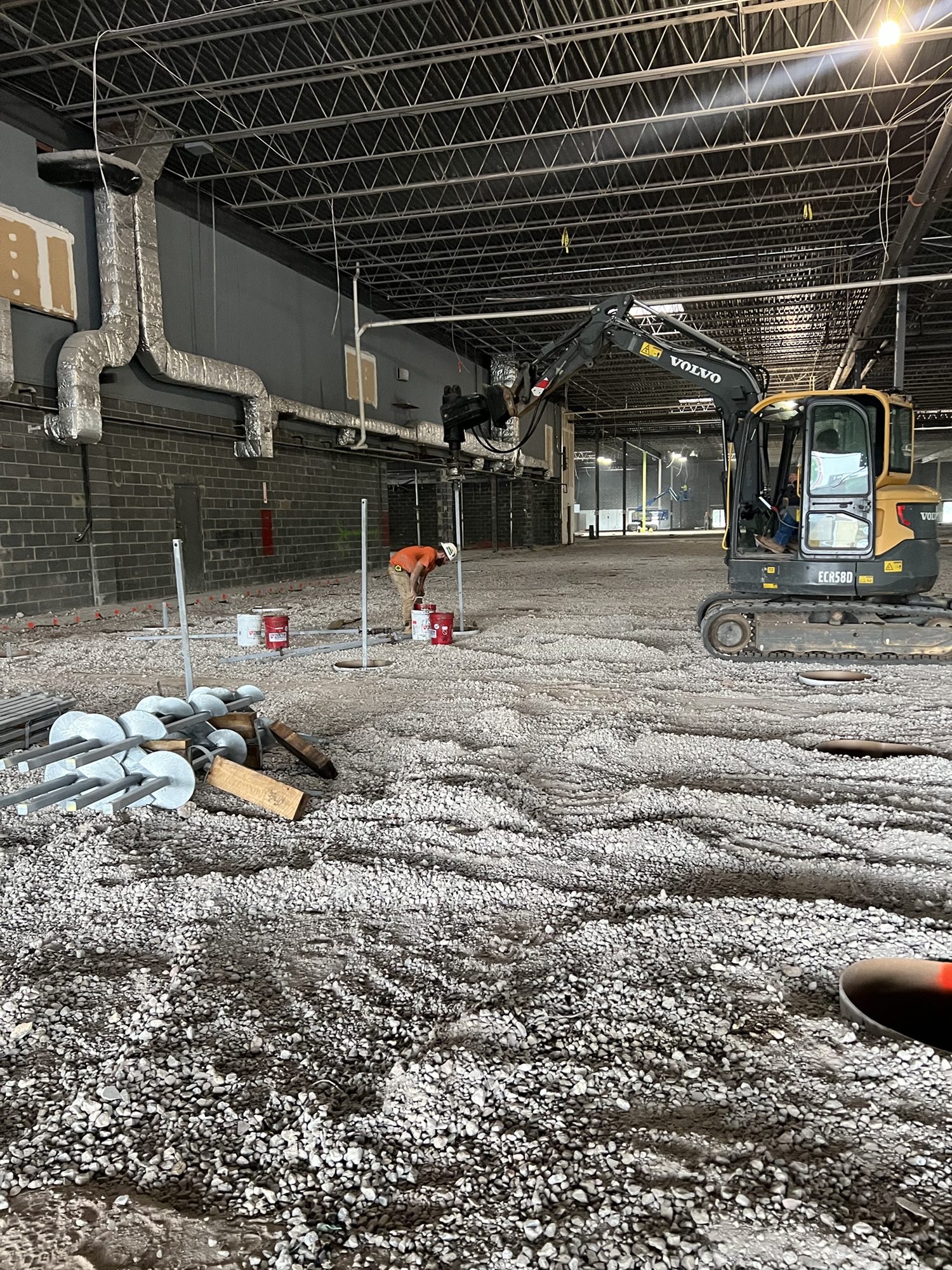
Installing helical pulldown micro-piles was a unique approach. Not the most common foundation remediation, the micro-piles are ideal for projects within existing buildings due to their small size and minimal vibration. The micro-piles (also known as screw piles) consist of circular steel plates welded to a central steel shaft. The steel shaft extends from the plates in the ground to the surface to provide structural support and transmit the loads from the structure to the helical plates below. The piles are screwed into the ground, and once they hit something solid, they continue to spin until they are locked in place.
The helical micro-pile solution provided several advantages:
- Versatility — The plates can be installed in various soil conditions, such as soft soils, clay and sand.
- Rapid installation — The installation process is efficient and does not require curing time, allowing for immediate load transfer.
- Load testing — Load tests can be conducted during installation to verify the load-bearing capacity of the piles.
The micro-piles could also be installed in multiple short sections. With the warehouse roof at 22 feet high, the piles were installed in 10-foot sections, one section at a time, until the required depth was reached.
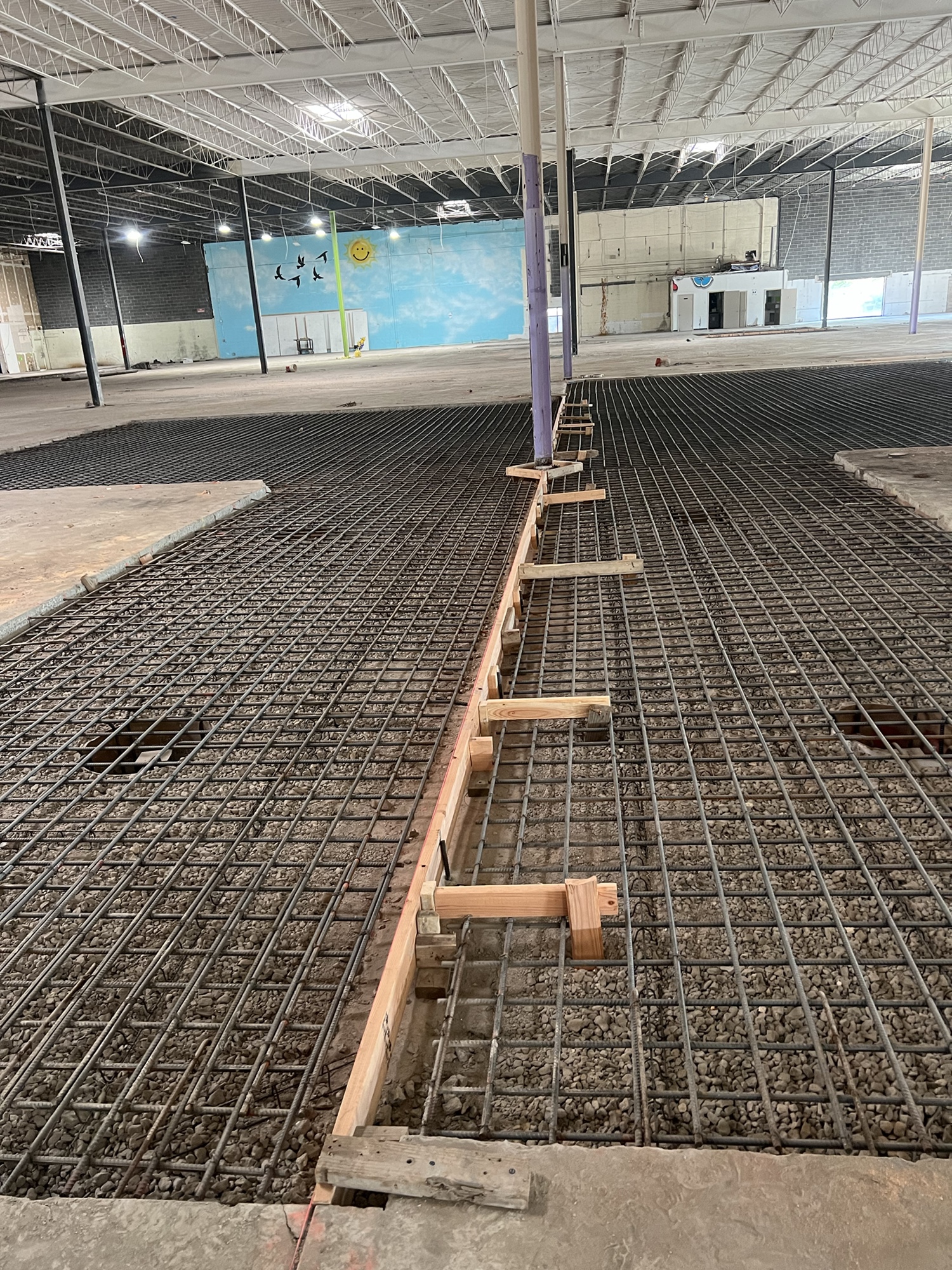
As construction lead, REDCOM repaired 60,000 square feet of slab, installing 450–500 screw piles that extended 48–50 feet into the ground in each section of the slab.
Results
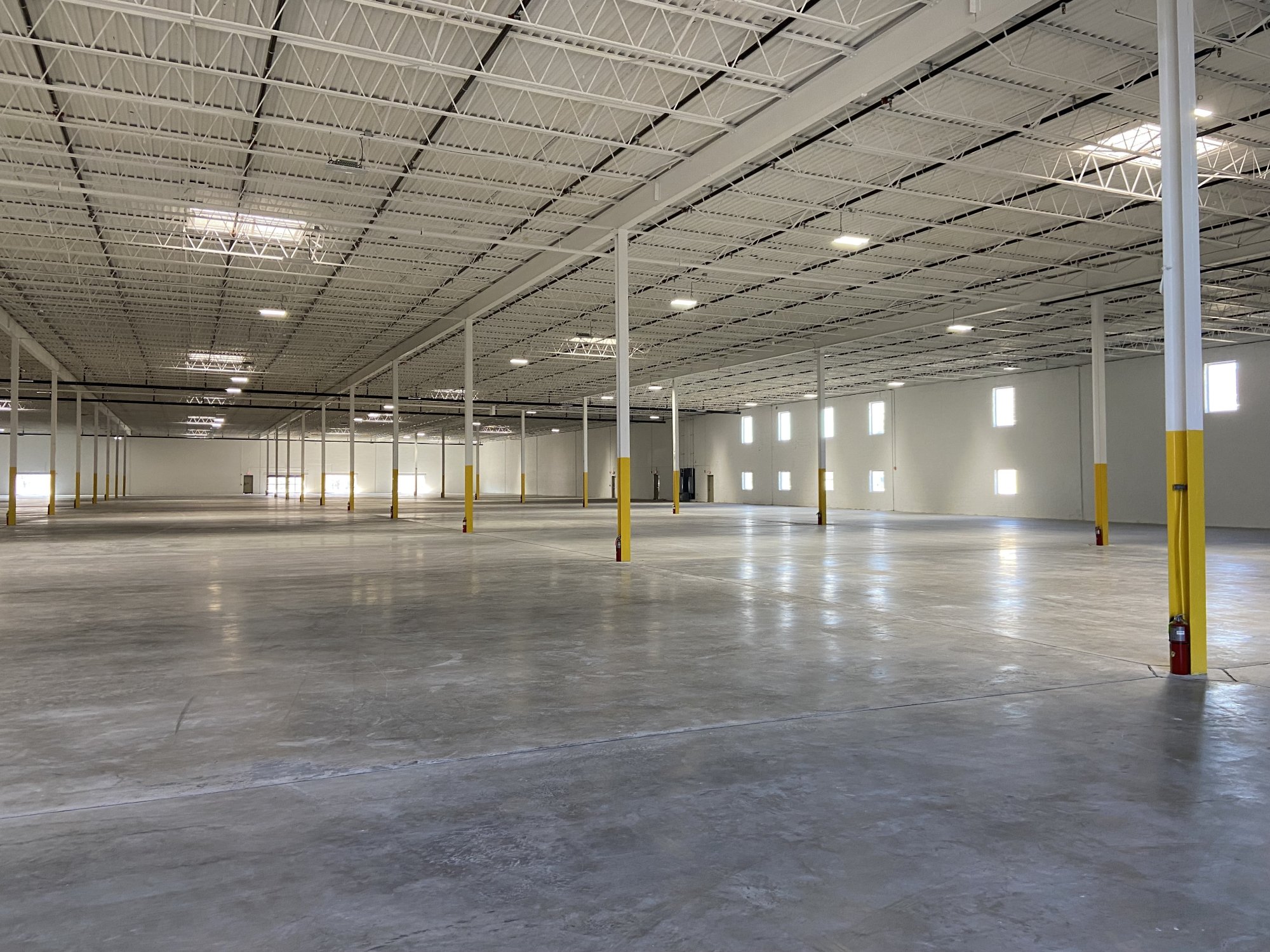
In just two and a half months, the project team stabilized the compromised structure, allowing the warehouse renovations to move forward. Within 14 months, the warehouse was fully remediated and ready for occupancy, a testament to the power of unified expertise and transparent teamwork.
Lessons Learned / Collaboration as the Foundation of Success
Several factors supported the success of this unusual, complex remediation project:
- Owner engagement — The building’s owner was fully present and engaged in the project.
- Early input and inclusion — REDCOM participated in the early project meetings, providing input and information to support the owner’s decision-making. Active early participation supported accurate design, engineering with cost in mind and construction guidance which accelerated the project.
- Open environment for dialogue — The owner, REDCOM, Langan and Bilow Garrett established a direct and open environment where ideas could be freely discussed and debated. Participants from the engineering, architecture and construction disciplines were encouraged to share their viewpoints and engage in productive discussions. The collaborative culture created a balanced, multidisciplinary perspective that led to the optimal outcome.
John Cannata, senior vice president of preconstruction at REDCOM, noted the importance of the collaborative project approach, saying, “This project was run in a way that achieved optimal results and enabled our organization to operate at its best. Internally, REDCOM brought our in-house engineering, architecture and construction management teams to the table to discuss the remediation options suggested by the client and its engineer. REDCOM worked with several subcontractors to price out the different options, and we were able to go back to the client with hard cost data and an educated point of view on the challenges and considerations of each potential solution.”
OUR DIGITAL PARTNERS