





One hundred years ago, “Winnie-the-Pooh” was published, the 40-hour workweek took hold, and Graco, my workplace, was founded. A century later, the world in which contractors operate has transformed just as dramatically.
As Graco marks its 100th anniversary, the company reflects on a legacy built shoulder-to-shoulder with contractors in painting, pavement, concrete, roofing, coatings and beyond through shifting markets, workforce changes and evolving jobsite demands. While tools, technology and materials have advanced, one principle has remained constant. Contractors succeed when they find smarter, faster and more reliable ways to get work done.
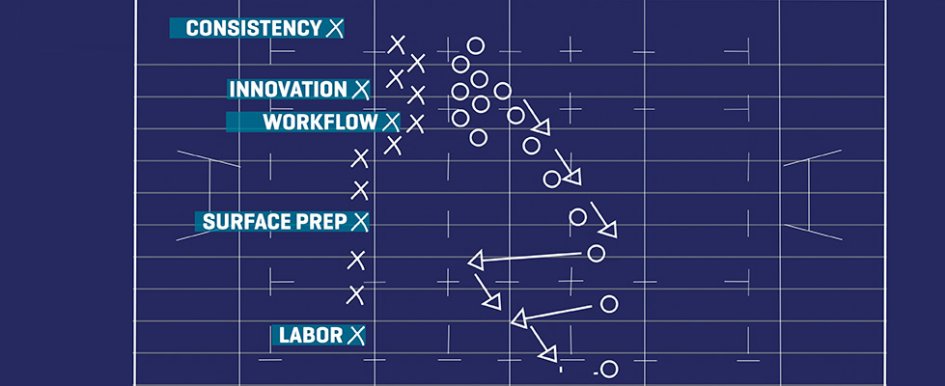
Now, as the industry moves into 2026, contractors continue to navigate familiar challenges such as labor shortages, tighter margins, and rising expectations around quality and efficiency. The tools have changed over the past hundred years, but the advantage hasn’t. Contractors who stay adaptable and keep productivity at the forefront of business succeed through consistency, practical innovation and smarter workflows.
Doing More With Less Labor
Labor shortages are not new to construction, but they are more structural than ever. Fewer workers are entering the trades, and experienced professionals are retiring faster than they can be replaced. As a result, many contractors operate with half the workforce they once had while still being expected to deliver the same volume of work with smaller crews.
Instead of trying to replace labor, forward-thinking contractors are rethinking productivity. The focus has shifted toward equipment, workflows and processes that allow smaller crews to complete projects faster without sacrificing quality. Experience has shown that real productivity gains come from an amalgamation of small, continuous improvements rather than one major change.
Time spent spraying or applying material is where contractors make their money. Time spent prepping, cleaning, moving equipment or troubleshooting is necessary, but it’s not productive. The most successful contractors are reducing wasted time at every stage of the job, from setup to cleanup, and original equipment manufacturers (OEMs) are helping make those processes more efficient through ongoing technological innovation.
Surface Preparation as a Strategic Advantage
Surface preparation has taken on greater importance across the industry, extending beyond just painting and coatings. Proper preparation directly impacts finish quality, durability and long-term performance. When prep is rushed or inconsistent, the result is often rework, callbacks and lost margin.
What’s changed is how contractors think about prep. Instead of viewing it as a fixed cost, many are looking for ways to reduce prep time without compromising results. Improvements in application technology, material control and overspray reduction mean contractors can often prep smaller areas, use fewer materials and still achieve professional finishes.
Experience has shown that preparation is not just about technique. It is about systems. When equipment and workflows are designed to reduce unnecessary steps, prep becomes more predictable, more efficient and easier to replicate across contractors.
Consistency Is the Competitive Edge
Consistency is nonnegotiable on today’s jobsites. Whether it’s applying coatings, textures or protective materials, inconsistent results translate directly into rework, wasted material and additional labor that erodes profitability.
Consistency also plays a critical role in training. With higher turnover and fewer experienced workers, contractors cannot afford long learning curves. Tools and processes that are intuitive and repeatable allow new workers to become productive faster, helping reduce the knowledge gap without extended training time.
Decades of jobsite experience reinforce a simple truth: Contractors do not just need more powerful equipment. They need systems that deliver consistent results every time, regardless of who’s behind the controls.
Smarter Workflows Through Data Visibility
Another major shift shaping contractors in 2026 is the growing role of data. Today’s contractors are increasingly managing multiple crews, jobsites, equipment and timelines simultaneously. Visibility into job progress, material usage and equipment performance is no longer optional, but essential.
Digital tools are helping contractors make informed decisions without physically being on every jobsite. Access to real-time data allows owners and managers to identify bottlenecks, balance workloads, plan maintenance and even bid future jobs more accurately based on historical performance.
This demand for data is being driven in part by a new generation of leaders entering the industry, many of whom expect the same level of insight and transparency they experience in other areas of their lives. However, the key is ensuring that data remains practical and actionable. Contractors don’t want more information — they want the right information that helps them make decisions and keep work moving.
Innovation Driven by the Jobsite
Some of the most meaningful innovations in construction start with frustration on the jobsite. Contractors are quick to point out what slows them down, what breaks and what simply takes too long. Listening to those pressures has been one of the most important drivers of meaningful advancement over the years.
True innovation begins in the field where manufacturers take the time to observe how contractors truly work and design solutions rooted in real-world challenges. The most meaningful advancements emerge not from the lab but from insights gained through countless on-site conversations, recognizing common patterns and finding smarter ways to simplify and strengthen the process.
The industry has also learned that innovation only matters when it’s embraced on the jobsite. Equipment must be intuitive to operate, simple to maintain and straightforward to repair. Every hour of downtime affects the bottom line, which is why the most valuable solutions are those that keep crews working and contractors competitive.
Preparing for the Next 100 Years
Contractors who succeed in 2026 will be those who embrace incremental improvement, invest in consistency and remain open to new technology that supports productivity. Electrification, portability, data-driven workflows and simplified operation will continue to shape how work gets done.
At the same time, the fundamentals have not changed. Contractors still win by completing high-quality work efficiently, protecting their margins and delivering reliable results for customers. The difference is how those goals are achieved.
A century of experience has shown that progress in construction doesn’t happen overnight; instead, it happens steadily, driven by jobsite demands. By focusing on consistency, smarter workflows and contractor-led innovation, today’s contractors are building a stronger foundation for the future.