CONEXPO-CON/AGG 2026
Unpacking the biggest talking points & takeaways from this year’s show
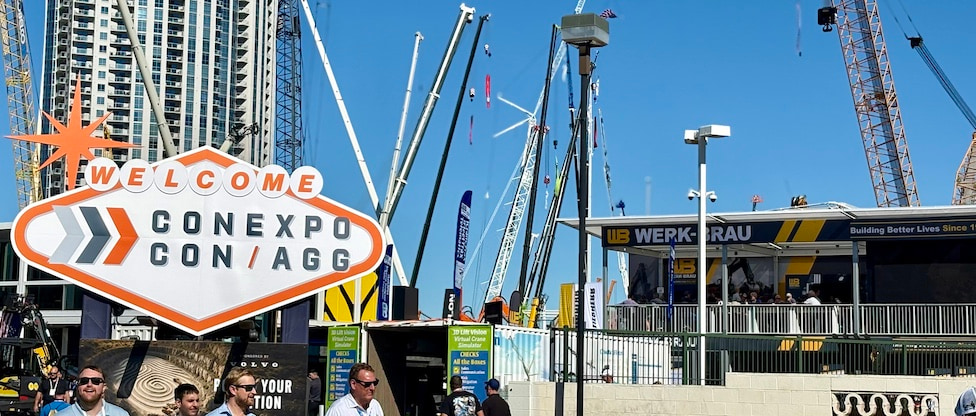
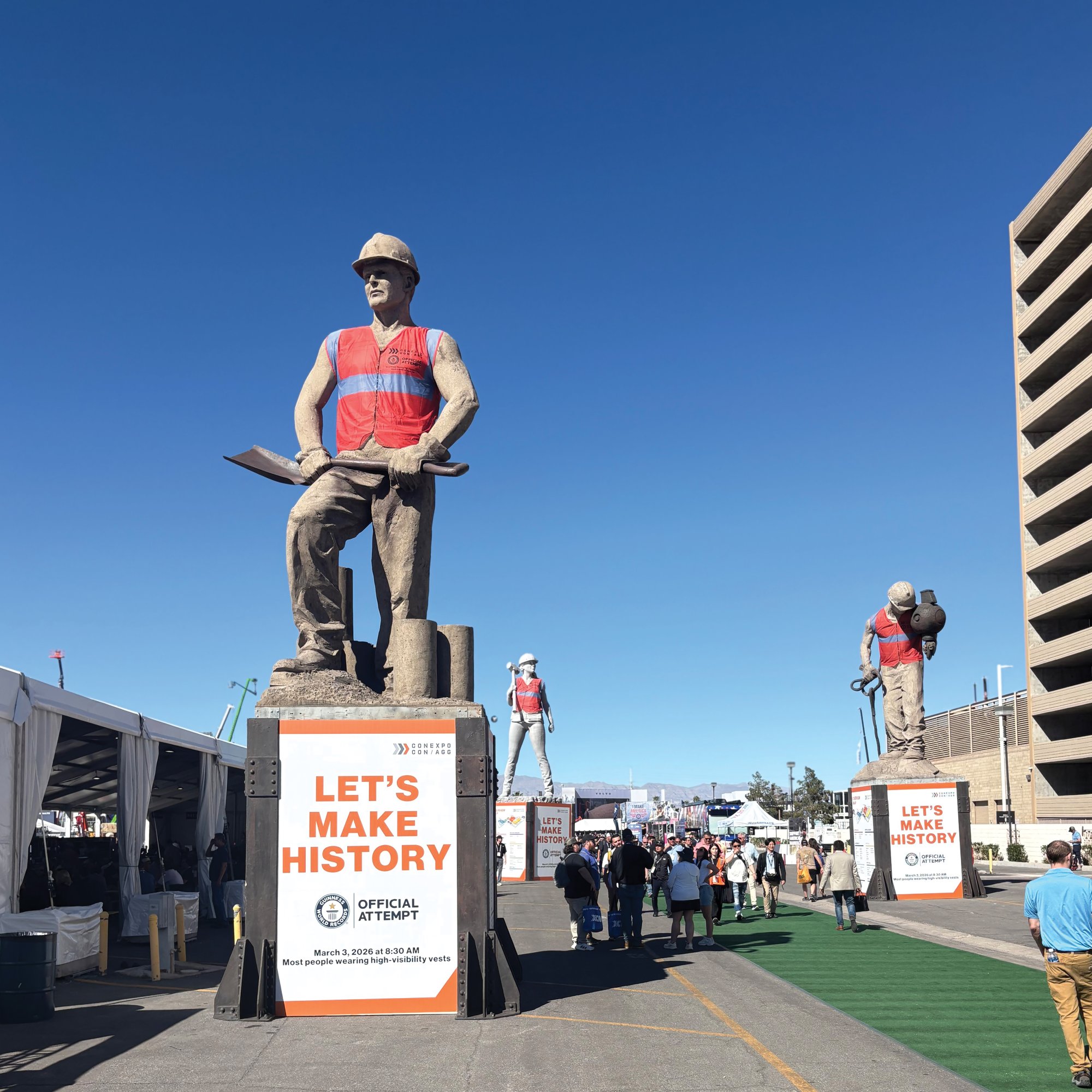
Another CONEXPO-CON/AGG has come and gone, leaving an unforgettable impression on the industry. This year’s show welcomed 140,000 attendees and 2,000-plus exhibitors and covered 3 million square feet. Held every three years, CONEXPO is one of North America’s biggest trade shows, and it’s a chance for all members of the construction industry to come together and experience what’s new.
To help share the scope of this year’s event, we talked to these five exhibitors about the show, the state of the industry and where construction is going next.
- Kevin Smith, vice president, Ditch Witch
- Angelica Hedge, marketing manager, off-the-road, Bridgestone Americas
- Darin Gronwold, product manager, Ignite Attachments
- Rachel Palmer, product marketing manager, AlignOps
- Kevin Kruck, director, earthmoving marketing, John Deere
1. What’s one word you would use to describe CONEXPO-CON/AGG 2026? And why?
Gronwold: Appreciative. CONEXPO-CON/AGG 2026 was an incredible opportunity to connect with contractors, operators and business owners from across the industry. For Ignite Attachments, it was our first time exhibiting. That made it even more meaningful.
The best part was the conversations. It was great to meet so many people, learn about their operations, and show how Ignite’s attachments can help them get more done. There was a lot of interest in the products, but just as much interest in what happens after the sale. That opened the door to talk about our commitment to supporting customers and making the buying experience as straightforward as possible.
The show was full of innovation, but the biggest takeaway was simple: People are looking for solutions they can count on right now. Being part of those conversations was something the team truly appreciated.
Palmer: Huge! The scale is hard to comprehend until you’re there — massive booths, massive equipment and nonstop traffic. It’s an overwhelming (in a good way) reminder of how big and dynamic this industry really is.
Hedge: Unifying. Whether you’re an exhibitor or attending the show, you know CONEXPO-CON/AGG brings together like-minded people who speak your language. Everyone at this show understands the industry, its challenges and successes, and shares the same goal of moving it forward.
For Bridgestone, CONEXPO-CON/AGG 2026 was an opportunity to connect with our long-standing partners and form new relationships with businesses focused on learning about our three new products: the MasterCore VMTD, the 24.00R35 3-Star VRDU and the Firestone Multi Block T. All of these tires are designed with the latest technologies and elevate productivity, to advance the industry.
Kruck: Connection. CONEXPO-CON/AGG brings the industry together in one place. Nowhere else can you meet face-to-face with such a wide range of customers, dealers and passionate industry members within a single event. It’s a rare opportunity to strengthen existing relationships, spark new ones and have meaningful, in-person conversations that just can’t be replicated elsewhere. Beyond the equipment and innovation on display, it’s really the connections that make the event so valuable and memorable.
2. What emerging trends are you keeping an eye on?
Smith: One of the biggest trends we’re focused on is the shift toward smarter, more connected jobsites. Contractors are looking for real-time visibility into their equipment, productivity and overall job performance. Telematics platforms like Orange Intel are helping lead that shift by turning machine data into actionable insights. Instead of reacting to problems, contractors can make proactive decisions that improve uptime, reduce costs and ultimately increase profitability. At the same time, automation continues to gain momentum as companies look for ways to do more with fewer people.
Gronwold: One of the biggest trends we’re watching is the growth of the mini loader market. There are more manufacturers entering the space, and more contractors are adding these machines to their fleets. That creates a clear need for well-built attachments designed specifically for that size class. We’re especially excited about this growth because Ignite offers one of the only dual interface options available, making it easy to pair attachments across different machine brands.
We are also seeing skid-steer loaders and compact track loaders continue to grow in size and capability. These machines are getting more powerful, and that opens the door for attachments that can take on heavier-duty applications. It’s something we are paying close attention to as we look at future opportunities.
Another trend that stood out at CONEXPO is how the attachment buying process is evolving. More original equipment manufacturers are exploring e-commerce, but we’ve been here for several years and continue to enhance the customer experience. We’re focused on making it easier for customers to find the right fit, understand pricing and get what they need quickly. That shift toward a more streamlined, transparent buying experience is something we expect to keep growing.
Hedge: A key trend for 2026 is the advancement of data collection to enhance operational efficiency and product development or enhancements. Although data collection technology is well-established in the industry, CONEXPO-CON/AGG served as a powerful reminder of how companies are increasingly using these insights to build solutions that benefit the entire ecosystem.
At Bridgestone, analyzing field-acquired data has been crucial in developing new premium tires specifically designed to enhance productivity. As technology advances, our ability to create and improve mining, quarry and construction tires will only get better.
Palmer: Wireless/GPS tracking and tech consolidation. Contractors want real-time visibility into equipment and operations — but without adding complexity. At the same time, they’re actively looking to replace fragmented systems with one connected platform.
Kruck: Autonomy and AI continue to dominate the conversation. But an area that we’ve identified that needs to be harnessed is the massive data flood coming from machines, sensors, telematics, timecards, etc. Data is quickly becoming just as critical to the jobsite as concrete and steel. Every project, every machine, every operator interaction creates insights that, when harnessed, can help customers build jobsites that are smarter and safer. Customers are asking for holistic visibility into their jobsites so they can understand how to optimize their operations, fleet management and production tracking. They want easy-to-understand, simple views on if they are making money as the work happens, not a week later. We’re excited about solving this for customers because all the cool technology in the world doesn’t matter if it’s too complicated to set up or too hard to manage and understand.
3. What are you hearing from your end users about the future of the industry?
Smith: Contractors are telling us they need solutions that help them work more efficiently with smaller crews. Labor shortages aren’t going away, so there’s a growing demand for technology that simplifies operations and reduces the learning curve for operators. They’re also looking for tools that give them better control over their business, especially when it comes to tracking productivity, managing fleets and maximizing equipment utilization. The future, from their perspective, is about working smarter, not harder.
Hedge: Data will become increasingly important. Currently, the industry is working to transform collected insights into streamlined operations that enhance efficiency. This work is essential to the success of newer innovations, such as the autonomous vehicles being developed by original equipment manufacturers.
As a tire manufacturer, Bridgestone is dedicated to supporting the growth of innovations driven by data through our tire offerings, which are designed to deliver optimal performance and provide extended tire life. We recognize that even small improvements in tire life and efficiency can have a significant impact on our customers, enhancing their profitability and ability to innovate.
Gronwold: We’re hearing that customers are being asked to do more with the equipment they already have. The mini loader market continues to grow, especially for jobs in tighter spaces, while full-size skid-steer loaders and compact track loaders are more capable than ever. That combination is encouraging customers to think differently about the value attachments can offer and how they can get more out of every machine.
Automation is part of that conversation, but it’s not the whole story. What we’re really hearing is a focus on versatility and ease of use. Customers want attachments that can handle multiple tasks, reduce downtime and deliver consistent performance without adding complexity.
There’s also more emphasis on making smart purchasing decisions. End users are doing their homework. They want the right fit, the right value and something that will hold up over time. That continues to shape how we approach both product development and the overall customer experience.
Palmer: They want simplicity and visibility. The focus is on tools that are easy to adopt in the field, actually get used by crews, and provide clear, real-time insights without adding more systems.
Kruck: Our customers are optimistic about the future and where the industry is headed. There’s enormous growth in this industry. In about five years from now, the market is anticipated to reach $16 trillion worldwide. Many customers have healthy backlogs of work, which is giving them confidence about the future.
At the same time, there’s an added layer of optimism tied to infrastructure investment, as there are still a number of major projects in the pipeline that haven’t yet been fully awarded. If you take into consideration the sheer number of data centers that are being developed, as an example, that also relies on the power and grid infrastructure, as well as water and wastewater projects, there is a lot to be optimistic about.
4. In which areas of the industry do you see the most room for growth?
Smith: There’s significant opportunity in the continued adoption of telematics and automation in underground construction. Many contractors are still in the early stages of using connected technology to its full potential. As these tools become more intuitive and easier to integrate into daily operations, we’ll see broader adoption across fleets of all sizes. Additionally, solutions that help contractors maximize efficiency with smaller crews will continue to drive growth, especially as workforce challenges persist.
Gronwold: The mini loader market is certainly growing, and we see a lot of opportunity there as more contractors look for maneuverable equipment that can handle a wide range of jobs. At the same time, there will always be a strong need for full-size skid steer loaders and compact track loaders. Those machines continue to be the backbone of many operations. We’re watching both segments closely to ensure we have the right lineup to support how our customers work.
That’s where our design approach comes into play. We focus on building attachments that balance strength, weight and performance so customers can get the most out of their machines. At the same time, we stay nimble. As customer needs shift or new opportunities emerge, we’re able to adapt quickly and refine our offerings.
Growth isn’t just about new categories. It’s about continuing to improve what already works and making sure customers have dependable solutions that help them get their projects done efficiently.
Palmer: Connected jobsite technology. The biggest opportunity is bringing together time, equipment, safety and reporting into one system.
Kruck: The growth in infrastructure investment also presents the fact that jobsites are becoming more constrained, especially in urban environments. Therefore, contractors are increasingly turning to smaller, more versatile machines that can do more in tighter spaces. Compact equipment is playing a key role in residential construction, utility jobs, landscaping operations and infrastructure projects, with strong projected growth and adoption over the next decade.
Access to a connected jobsite, and the insights it provides, will be increasingly critical to how a customer bids, executes and profits from a job. We’ve laid the groundwork for a smarter, connected jobsite, and we’re excited about the evolution in how work gets done.
5. What is the most common pain point brought to you by attendees this year?
Smith: A common theme we heard was around visibility and control. Contractors want to know what their machines are doing at all times and how they can improve performance across jobsites. Many attendees were looking for ways to reduce downtime, improve job efficiency and make better data-driven decisions. That’s where telematics really stood out. With platforms like Orange Intel, we were able to show how contractors can take the guesswork out of their operations and directly impact their bottom line.
Hedge: The most common inquiry we’re hearing this year centers on a single challenge: capacity. With most customers operating at their peak, the question is no longer just about the tire — it’s about how tire performance can drive total site efficiency. This aligns perfectly with Bridgestone’s CONEXPO theme: Move More with Less. Whether that means hauling increased payload per cycle or maximizing uptime, we showcased the new Bridgestone VMTD and VRDU as direct solutions to those needs. Beyond the rubber, we’re demonstrating how our dealer network and engineering services provide the on-site support necessary to sustain that efficiency over the long haul.
Gronwold: One of the most common pain points we heard was long lead times. Contractors and business owners can’t afford to have equipment sitting idle while they wait on attachments. When timelines are tight, delays can impact the entire job. It stood out when we shared that if a product shows “add to cart” on our website, it’s in stock and ready to ship, often the same day. That level of availability gives customers confidence they can keep projects moving.
Pricing transparency was another big topic. Many attendees are frustrated with having to request a quote just to understand cost. It slows down the decision-making process and adds unnecessary friction. We’ve taken a different approach by making all of our pricing visible online, along with free shipping, so customers can evaluate the full cost up-front and make decisions quickly.
After-the-sale support also came up often. Limited warranties, hard-to-find parts and slow service can lead to costly downtime. We focus on supporting customers through the entire life cycle, including easy access to parts and resources, such as in features like the QR codes on our attachments, which link directly to manuals, how-to content and parts breakdowns, so operators can quickly find what they need and get back to work.
Palmer: Two themes came up constantly: disconnected systems and durability. Contractors are frustrated with juggling multiple platforms without a single source of truth. At the same time, one surprising but consistent question was, “Is it rugged?”— especially around GPS and tracking hardware. They need technology that can withstand dust, vibration, weather and constant movement. At the end of the day, it has to be both connected and built for the realities of the jobsite.
Kruck: The labor shortage is a persistent challenge. As John Deere noted in the CONEXPO/Con-Agg keynote, by 2040, some projections show this industry growing by 70% — far outpacing the workforce needed to support it, with labor growth projected to rise only modestly by 2040. In the U.S. alone, the construction industry will need to add nearly 700,000 new jobs by 2031 to keep up with demand. To help customers solve for this challenge, John Deere is focused on connecting the physical jobsite with the digital world to make equipment smarter, easier to use and more productive.
Technology grounded in purpose is enabling crews to do more with fewer people and thereby reduces the experience required to deliver consistent results. Machine automation and assist features can automate repeatable tasks, improve grade and material placement accuracy, and help minimize rework, while AI-powered tools can turn jobsite data into practical guidance — such as predicting and minimizing bottlenecks, optimizing equipment utilization, and supporting safer operations through object detection and alerts. Just as important, stronger jobsite visibility is becoming a competitive advantage: When contractors have near real-time insight into production, cycle times, fuel and idle, material movement, and actual versus planned progress across mixed fleets, they can estimate and bid with far more confidence. These are real solutions that are tackling the labor shortage challenge today and setting up contractors for success tomorrow.
6. How have you seen the industry change since CONEXPO 2023 (if you attended/exhibited)?
Gronwold: CONEXPO 2026 was our first year exhibiting, but we attended in 2023 while Ignite was still a new company. At that time, we were focused on identifying gaps in the market and understanding where we could bring value. A lot of those early observations helped shape the scope of Ignite Attachments as it exists today.
Coming back in 2026, one of the biggest changes we noticed was the continued growth of automation and technology. There’s a clear push toward improving efficiency on the jobsite, and that showed up across many booths. At the same time, we also saw some manufacturers getting back to the basics. Proven designs are still very relevant, with thoughtful updates that improve performance without adding unnecessary complexity.
That balance really stood out. It aligns closely with our core values as a company. It’s about combining smart modern solutions with practical, dependable design. We focus on building attachments that work the way customers need them to, without overcomplicating the process. Whether it’s through product design or the buying experience, our approach is centered on helping customers work smarter and get consistent results every day.
Palmer: Didn’t attend, but I’ve heard from others that there’s been a shift from curiosity to urgency. In 2023, conversations were exploratory. Now, contractors are ready to act — they’re asking how to implement solutions quickly and replace what they’re already using.
Kruck: Since the last CONEXPO, we’ve witnessed a more positive perception and adoption of technology. There’s been a noticeable shift in how the industry now views these solutions, and what was once met with some reservations is now increasingly seen as an enabler of progress. Contractors are more open to adopting new tools and digital solutions, recognizing how they can drive efficiency, improve safety, and augment and offset skilled labor shortages.
7. What was one of the most interesting new products or offerings you saw from exhibitors (aside from your own) and why?
Gronwold: One of the more interesting trends we saw was the continued push toward wireless connectivity and smarter functionality within attachments. There’s clearly a focus on giving operators more visibility and control, whether that’s through machine integration or real-time data.
We see that as a positive direction for the industry, as long as it’s tied to real productivity gains. At the end of the day, customers are looking for ways to work more efficiently, reduce downtime and get more out of their equipment. If added technology helps achieve that, it has a lot of value.
At the same time, it’s something that needs to be approached thoughtfully. Not every jobsite requires added complexity, so the challenge is finding the right balance. That’s something we’re paying attention to as we continue to evaluate how new innovations can fit into a practical jobsite-focused approach that supports how our customers actually work.
Palmer: Dashcams for yellow iron. We’ve recently rolled out dashcams at AlignOps, and we’re already getting questions about extending that into heavy equipment — but that’s a completely different challenge than on-road vehicles. The dust, vibration and harsh conditions change everything. It was exciting to see manufacturers starting to build specifically for that environment. It signals where the industry is headed: more visibility, even in the toughest parts of the jobsite.
8. What industry topic(s) did you hear mentioned most at the show? What did people say about it?
Smith: Two topics came up consistently: connectivity and automation. There’s a clear shift toward fully connected jobsites where machines, crews and managers are all aligned through data. People aren’t just talking about collecting data anymore. They’re focused on how to use it to make better decisions and drive profitability. Automation was also a major point of discussion, especially as a solution to workforce challenges. Contractors are increasingly open to automation, as long as it enhances productivity without adding complexity or slowing them down.
Gronwold: One of the most common topics we heard throughout the show was the rising cost of equipment and attachments. It’s top of mind for many contractors and business owners who are trying to manage budgets while still investing in the equipment they need to stay productive. There’s a growing awareness around value. Customers are looking more closely at what they’re getting for the price and whether it truly aligns with their day-to-day work. That includes durability, performance and long-term reliability, but also how efficiently the attachment allows them to get the job done.
That’s where our approach comes in. At Ignite, we focus on delivering value-minded, quality-built attachments without overbuilding or overengineering. Adding unnecessary weight or features can drive up cost without improving performance. Instead, we design and test our products to match specific machine capabilities and ensure they can handle tough applications. It’s about giving customers what they need to perform, without paying for what they don’t.
Palmer: GPS tracking and consolidation. Contractors want to know where their equipment is, how it’s being used and how to reduce downtime — all within fewer, more powerful systems.
Kruck: Safety and digital jobsite solutions were a part of almost every conversation. Safety continues to be one of the most talked-about topics across the industry, and that was clearly reflected at the show.
In the John Deere/Wirtgen Group booth, visitors were excited to see the evolution of our jobsite safety portfolio, including solutions like SmartDetect, SmartDetect Assist, and SmartDetect Digital. These technologies are designed to support operators in near real-time, helping slow or stop machines when a human is detected, while also providing greater visibility into jobsite risks. This reinforced how much the industry is prioritizing safer, smarter worksites.
In addition, there was significant interest around our digital jobsite tools. Many contractors are operating mixed fleets, and the ability to gain clear visibility into production, operations, productivity and profitability across different equipment brands is becoming a major differentiator. Having access to insights like asset utilization across jobsites, the true cost of moving materials, or the cost of a day’s work helps remove guesswork and enables more confident, data-driven decisions.
Lastly, there’s also growing excitement around recent developments like our strategic acquisitions of Tenna and its Virtual Superintendent technology, which signal continued momentum toward more connected, integrated jobsite solutions for our customers.
CONEXPO-CON/AGG was an excellent week of connections across the industry and we are excited about the near term opportunities to promote a smarter, safer and more connected jobsite.
OUR DIGITAL PARTNERS