Protecting the Construction Material Bank
Securing inventory in a volatile market
In the complex landscape of nonresidential construction, spanning from heavy highway projects to extensive water and sewer pipelines, the greatest silent threat to a project’s profitability isn’t always a supply chain delay or a labor shortage. Often, it is the slow, relentless process of corrosion.
For midsized contractors, equipment and materials are your biggest investments. When steel rebar sits on a wet jobsite for months, or a heavy excavator is parked between projects, rust starts to set in immediately.
For years, the industry has relied on things like heavy oils, waxes or thick coatings. However, a more sophisticated and efficient alternative is available in the form of vapor-phase corrosion inhibitor (VpCI) technology.
The Science of the ‘Vapor Phase’
To understand how this technology works, one must first understand what it is fighting. Corrosion is a naturally occurring electrochemical process. When metal is exposed to oxygen and moisture, an electrical current flows between different areas on the metal surface (the anode and the cathode). This flow of electrons leads to the gradual breakdown of the metal, eventually resulting in surface pitting, structural failures and safety hazards that haunt project managers.
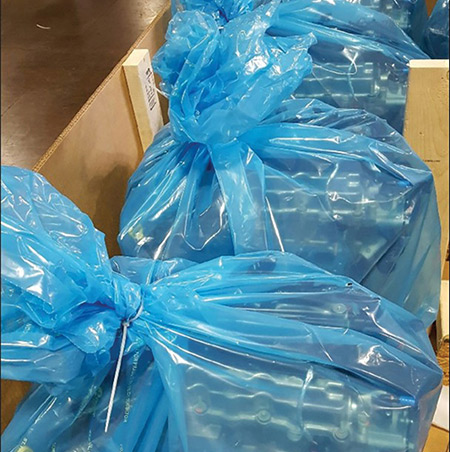
VpCI technology operates on a molecular level. Unlike traditional barrier coatings that require direct contact, VpCIs are “volatile,” meaning they possess a specific vapor pressure that allows them to evaporate into the air. When placed in an enclosed space — whether it is a shipping container, a pipe or a heavy equipment cab — molecules saturate the atmosphere.
Strategic Stockpiling in a Volatile Market
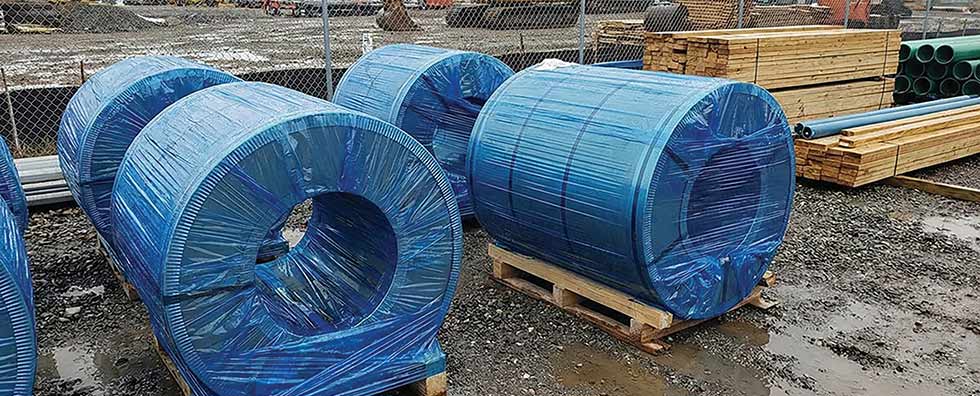
In today’s volatile global market, many midsized contractors have fundamentally shifted their procurement strategies. To hedge against inflation, sudden price spikes and unpredictable supply chain disruptions, firms are increasingly preserving corrosion-sensitive components and building a secure “bank” of critical raw materials.
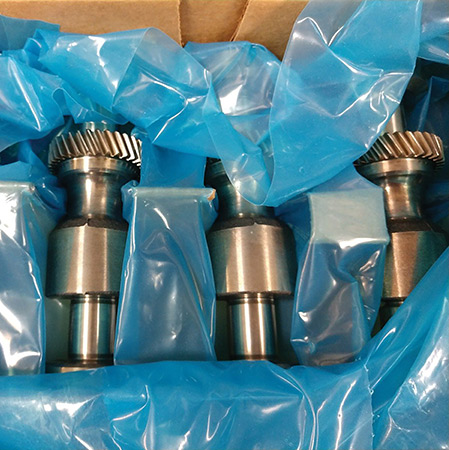
This “banking” of materials — such as specialized valves, structural steel or expensive electrical components — only works as a financial hedge if the inventory remains in “as-new” condition until the day of installation.
VpCI technology allows contractors to store these assets for extended periods — often several years —without the risk of degradation.
By creating a controlled environment within storage facilities, on-site trailers or even simple shipping crates, a contractor ensures that their “material bank” retains its full book value.
This proactive preservation ensures that when a project timeline reaches a critical milestone, the materials are ready for immediate use, preventing the costly rework or emergency replacements that can evaporate a project’s profit margin.
Strategic Applications for General Contractors
For the midsized firm, VpCI technology is not just a chemical solution; it is an operational tool that can be applied across several key sectors:
1. Protection of Heavy Equipment & Fleets
Midsized contractors often manage diverse fleets — excavators, pavers, cranes and dozers — that may sit idle during seasonal shifts or in the gap between major contracts. Salt air in coastal regions or high humidity in the South can be relentless on expensive machinery.
VpCI-infused films and shrink-wraps provide a solution far superior to traditional tarping. Because the protection is in the vapor phase, the inhibitor reaches hard-to-access areas of internal engine compartments, hydraulic systems and sensitive electronic cabs that a traditional spray-on wax could never reach.
When the equipment is needed again, the wrap is simply removed and recycled. There is no labor-intensive degreasing required, and the machine is ready to return to the jobsite within minutes.
2. Enhancing Concrete & Infrastructure Longevity
In road, bridge and highway construction, the corrosion of reinforced steel (rebar) within concrete is the leading cause of structural failure. While concrete provides some natural alkalinity to protect steel, chlorides from deicing salts or marine environments eventually penetrate the surface.
VpCI molecules can be used as admixtures during the initial concrete pour or as topical treatments during repair and rehabilitation phases.
For road and bridge contractors, the American Concrete Institute (ACI) provides specific guidelines, such as ACI 222R-19, which outlines the standards for protecting metals in concrete from corrosion. These “migrating” inhibitors travel through the concrete’s complex pore structure to reach the rebar, forming a protective film that significantly extends the service life of the infrastructure.
3. Underground Utility & Pipeline Preservation
For contractors involved in water, sewer and pipeline excavation, internal corrosion during the “laydown” period can be a significant liability. Large-diameter steel pipes are often delivered months before the trench is ready.
By placing VpCI emitters (small pouches or sponges) inside the pipes and capping the ends, contractors can prevent internal pitting. This ensures the integrity of the pipe remains intact for pressure testing and final commissioning.
Operational Efficiency & Labor Savings
The true business case for VpCI technology is centered on “man-hour” savings. A common pain point for contractors is the labor cost of “depreservation.” If a steel component arrives coated in a greasy rust-preventative, a crew must spend hours cleaning it with chemical solvents before it can be welded, painted or permanently installed. VpCI technology can eliminate an entire cleaning phase.
Environmental, Safety & Training
Safety and environmental regulations are increasingly stringent, particularly in the excavation and demolition sectors. Many traditional corrosion preventatives contain nitrites, heavy metals or high levels of volatile organic compounds (VOCs) that require special disposal and enhanced personal protective equipment. Most modern VpCI formulations are designed to be biodegradable, nontoxic and VOC-compliant, making them safer for crews to handle and easier to manage under Environmental Protection Agency or Occupational Safety and Health Administration guidelines. Implementing VpCI technology typically requires minimal training, as the application methods — such as using a VpCI-infused film or placing an emitter — are intuitive and integrate easily into existing site standard operating procedures.
A Strategic Asset for Growth
For the midsized general contractor, the shift from reactive rust management to proactive corrosion protection is more than a technical upgrade; it is a high-level business strategy. By preserving the integrity of materials and the longevity of equipment, contractors can reduce rework, lower maintenance costs and deliver higher-quality, more durable results to their clients. As construction technology continues to evolve, the invisible shield of VpCI technology is becoming an essential tool in the contractor’s kit, ensuring that the material banks and the infrastructure we build today remain standing for decades to come.
OUR DIGITAL PARTNERS