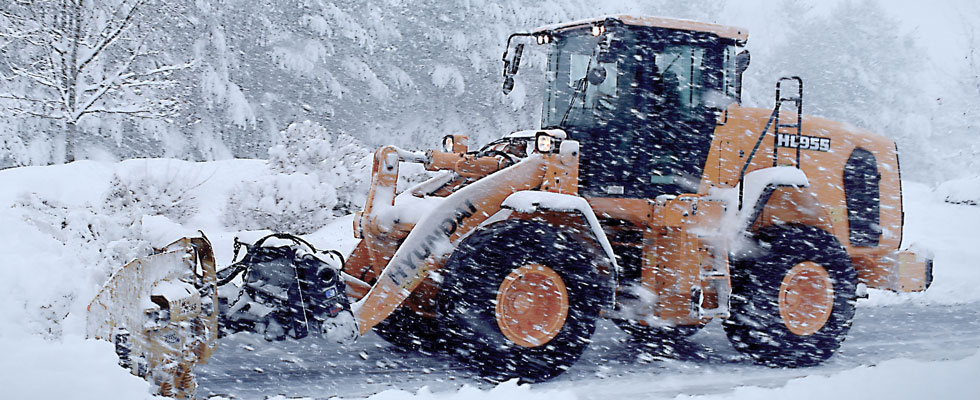
How to Prep Your Wheel Loaders for Winter Work
Metal Pless product pro’s top tips to make sure your fleet & operators are covered
As wheel loaders continue to play a larger role in snow removal, many contractors and state and local municipalities are taking steps to help their fleet’s wheel loaders be more productive in snow-removal applications during periods when construction work is on hold.
And the opportunities to gain new clients and more work is two-fold: engaging clients for snow removal jobs during the winter could turn into construction projects from those same clients in the spring. Diversifying your firm’s offerings can only help in the long run. The following list features a few things to keep in mind if you’re considering multitasking your equipment this winter.
Attachments
With the right combination of wheel loader and plow attachment, a wheel loader operator can plow more than 10 acres an hour. You will want to check with your equipment dealer for assistance selecting the right attachments for your wheel loader. Relatively new to the United States, hydraulic snow blades have been in heavy use in Canada for many years.
As with other equipment exposed to extreme winter weather, these expandable snow blades require special use and maintenance care. When it comes to teaming hydraulic snow blades with wheel loaders, Jason Whittemore, sales manager for snow removal equipment manufacturer and distributer Metal Pless, provides expert insight.
“The weight of the loader and traction ability—the type of tire used—are key factors for properly matching the size of the snow blade to the loader,” Whittemore said. “For example, a 25,000-pound wheel loader with good snow tires can handle a bigger blade than a 30,000-pound loader with regular tires.”
Moldboard
Whittemore added that the size of the moldboard is another consideration. “A 12-22 unit has a 12-foot moldboard and 5-foot wings; while a 10-22 unit has a 10-foot moldboard and 6-foot wings. The wings contain the load of snow being plowed, enhance safety and direct the snow where the operator needs it to go,” he said.
He noted that the combination of three-spool hydraulic controls and a quick coupler available on some wheel loaders, for example, allows for fast switching between a bucket and a fully controllable snow blade.
Blade Position
According to Whittemore, it’s fairly easy to learn how to position hydraulic snow blades. “The key is in finding the correct height and dumping/tilting angle,” he said. “Once it’s set, leave it there.”
He noted that leveling guides on their blades allow the operator to match black- and red-colored pieces on the blade for proper leveling. Ease of use and ease of adjustment for the return-to-dig option are features that add to operator productivity.
Blade Maintenance
Hydraulic snow blade maintenance is fairly simple. After every shift, the operator should walk around the plow blade and coupler to identify and immediately repair any hydraulic oil leaks. The operator should also check for damage to wear edges on the blade and replace damaged edge components as needed.
Tires
Reliable snow-grip tires provide positive grip at all times, regardless of the direction in which the wheel loader is turning. “In snow removal applications, most of the weight, or load, is being pushed, rather than lifted,” said Brad Bisaillon, regional sales director for the Americas for Nokian Tires. “Standard tire maintenance practices throughout the winter season should include air-pressure checks and corrections to manufacturer’s specifications, as well as a visual inspection of the tire surface and sidewalls and the bead area where the tire meets the rim. Sometimes, the smallest rim damage can lead to perceived tire failures.”
Daily Maintenance
For snow-plowing applications, in addition to regular daily maintenance, it’s recommended to use auto-greasing while working and while bushings are hot. Keeping pins and bushings covered helps to resist salt corrosion.
OUR DIGITAL PARTNERS