



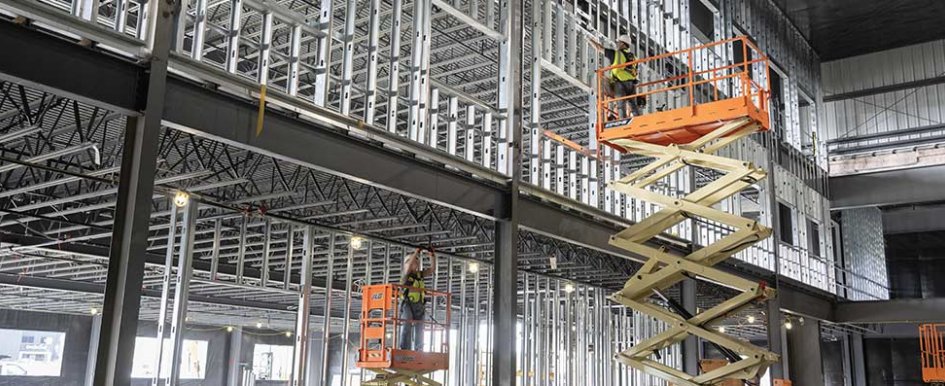


The equipment rental industry has long been defined by scale — big machines, big projects and big investments. But in recent years, a new trend has taken hold that flips that logic on its head. Microsized scissor lifts, once considered niche tools, are now among the fastest-growing segments in the access equipment market. Compact, electric-powered and engineered for indoor and outdoor work at height, these machines redefine productivity in tight spaces.
As urban jobsites become denser and more complex, and as facility maintenance continues to evolve with heightened sustainability and safety standards, the rise of the microsized scissor lift represents not just a product innovation, but a fundamental shift in how, where and why work at height is being performed.
The Urbanization Effect: Built for Tighter, Taller Spaces
Urbanization is one of the strongest drivers of demand for microsized scissor lifts. In cities around the world, space is at a premium. Buildings are growing taller while floor plans are becoming more compact and segmented. This shift is putting pressure on contractors and tradespeople to find equipment that fits within narrow corridors, operates quietly and causes minimal disruption to surrounding activity.
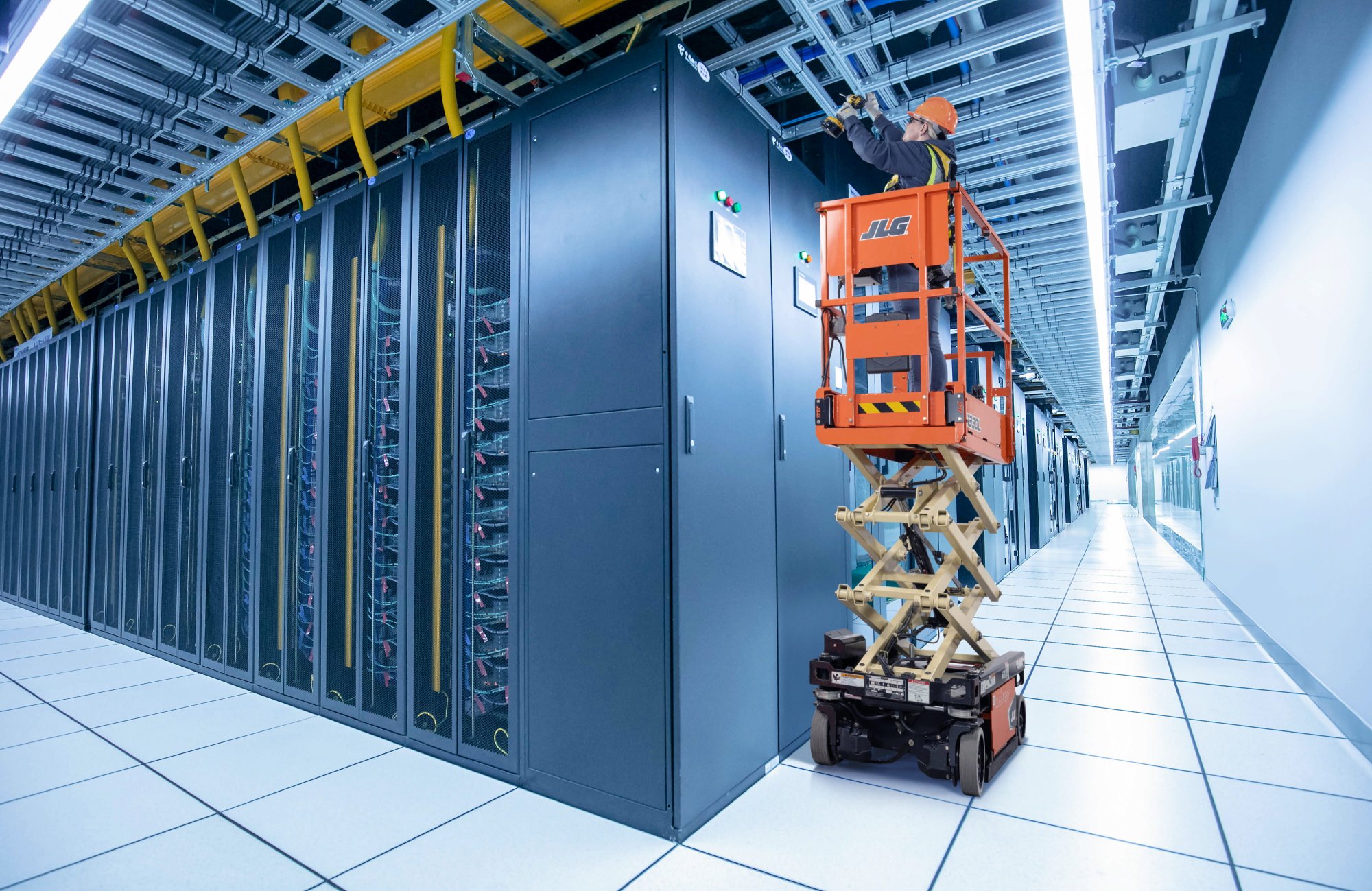
Unlike traditional scissor lifts, microsized models are designed to navigate these restrictions. With platform heights up to 26 feet and machine widths typically at 32 inches or less, they can pass through standard doorways, fit into passenger elevators and roll easily over weight-restricted flooring. Their lightweight frames allow for use on suspended or delicate surfaces like raised access floors, making them ideal for work in modern office buildings, schools and universities, hospitals, laboratories and clean rooms, hotels, casinos, museums and data centers.
The Expanding Role of Indoor Access Equipment
What began as a tool for interior finish work is now being used for a much broader range of applications. Electricians, HVAC technicians, fire suppression specialists, painters and IT teams are all adopting microsized lifts for tasks that previously relied on ladders or push-around platforms.
These compact machines are used in facilities ranging from universities and museums to airports and casinos: locations where indoor access must be unobtrusive and equipment must meet stringent operational requirements. Noise-sensitive environments, in particular, benefit from electric microsized lifts, which operate quietly and produce zero emissions.
Additionally, because these compact lifts can be driven at full height and support up to two workers with tools, they allow for faster, more efficient workflows than traditional stepladders or low-level access equipment.
Micro Lifts Meet Macro Expectations
Today’s renters expect more from compact equipment. In response, manufacturers have engineered microsized lifts that deliver on performance, safety and versatility without sacrificing the size advantages that define the category.
Standard features on many modern microsized models now include front-wheel drive, pin-based load-sensing systems with zero-weight load calibration, zero-degree inside turning radius and leak containment systems, while unique features like advanced battery monitoring systems, pothole protection and variable tilt functionality differentiate competitive models and brands.
Control systems have also become more advanced and smart interfaces are increasingly more common.
The market’s rapid evolution has created a demand for machines that fit physically and integrate seamlessly into the workflow of complex jobsites. These lifts need to move fast, perform reliably and minimize downtime. That’s why it’s important to consider and compare these three things:
- Equipment specifications — Specific measurements, such as the model’s lift reach and lift capacity, as well as its indoor/outdoor rating and how many occupants are allowed in the platform, will provide equipment owners with insights about which applications the machine can be most efficiently used in.
- Machine footprint — The machine’s gross vehicle weight, ground-bearing pressure and width, as well as if it has zero-turn capabilities, will suggest to equipment owners where the machine will efficiently fit and how it will effectively maneuver around jobsites.
- Duty cycles — The battery’s runtime and charging times will indicate how much uptime (when running) and downtime (when charging) the machine could have per day.
In addition to the three considerations mentioned above, equipment owners should learn all the “extras” available for an original equipment manufacturer’s (OEM’s) microsized scissor lifts. These features can enhance an operator’s productivity and/or extend the machine’s performance in certain applications.
A Shift Toward Electric
The trend toward electrification is another major force reshaping the microsized scissor lift category. With growing environmental regulations and increased demand for clean indoor equipment, electric-drive systems are no longer optional but essential. That’s because they require fewer scheduled services, give operators more duty cycles per charge and offer users more versatility when working in sensitive or restricted areas thanks to their ability to create a quieter work area, to have less dependency on hydraulic oils and to produce zero emissions.
Where the Market Is Headed
The growth trajectory for microsized scissor lifts shows no sign of slowing. As more industries adopt compact access equipment for specialized applications, expectations for performance, efficiency and environmental impact will continue to increase.
In the future, OEMs will continue to innovate by integrating more connectivity tools like fleet diagnostics and telematics. For rental providers, this means an opportunity to provide more sophisticated machines, as well as the chance to provide more value through support, training and consultation.
One thing is certain: Compact lifts are the future of indoor and outdoor access. And for those in the rental industry, this trend is too significant to ignore.
.jpg)
The Micro Moment: What This Means for Rental Operations
Microsized scissor lifts may be small, but their impact on the equipment rental landscape is anything but.
Rental-ready microsized lifts are filling a clear need: The ability to solve real-world access challenges in confined, indoor environments. Additionally, these machines appeal to a diverse customer base because they can be rented year-round for interior and exterior work, rather than tied to the seasonal construction cycle.
With expanding applications and increasing pressure to operate efficiently, these machines are helping define the next generation of access equipment.