Compact Equipment: A Contractor Essential
Efficiency & safety innovations make these machines indispensable
In today’s market, contractors must maximize use of every tool in their fleet to stay ahead of the competition.
“Gone are the days of where a contractor will bring in a piece of equipment onto a site to trench and then park it until it’s needed again,” said Greg Worley, market professional for Cat mini hydraulic excavators. “Fleet management practices have evolved to where all machines are expected to be versatile and to keep working.”
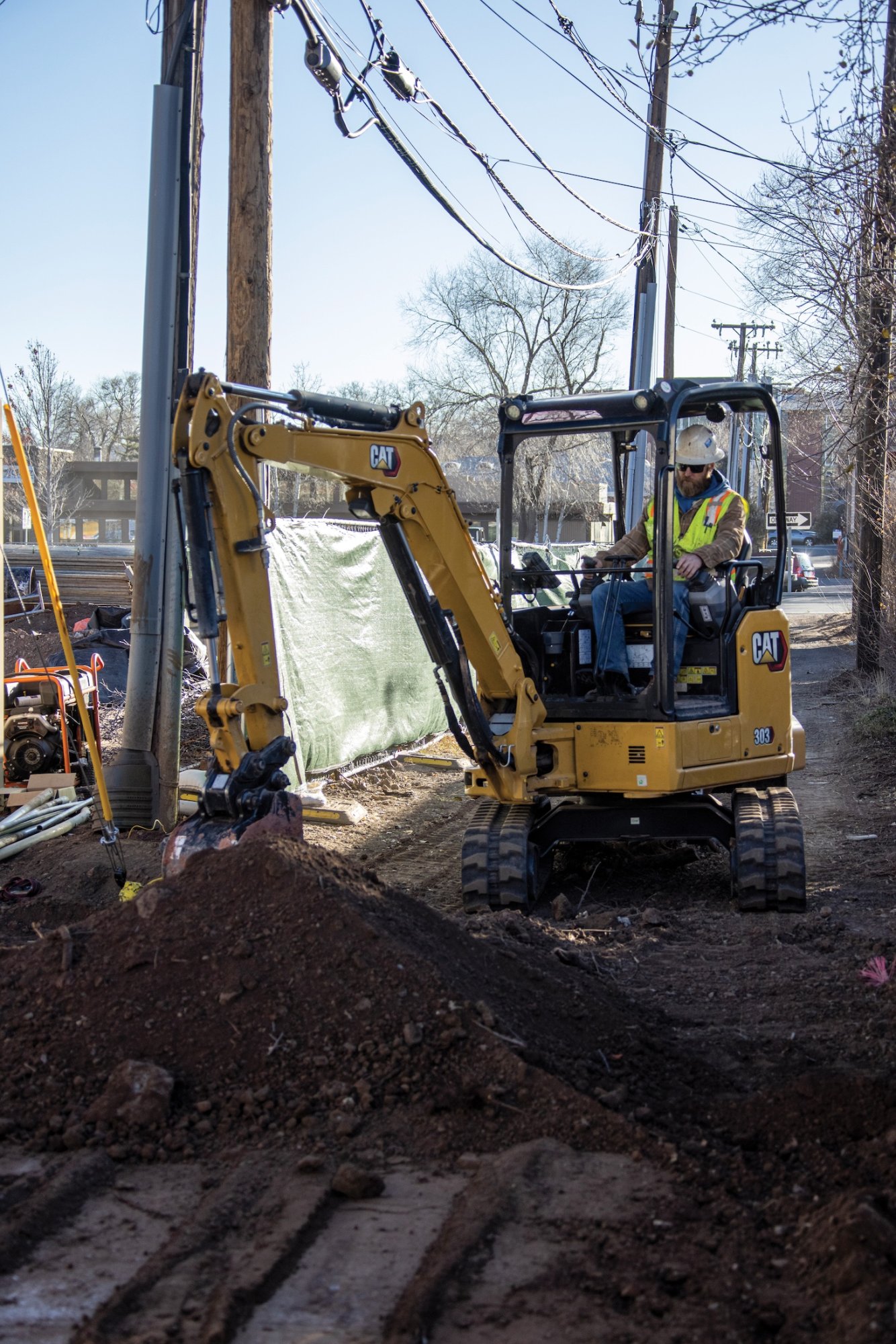
Also factoring into the equipment equation is the evolving type of work resource management and contractors complete. “They are facing more brownfield work compared to greenfield projects from years ago,” added Worley. Therefore, more urban development and redevelopment and backfill projects are being completed, which results in narrow roads with more stringent weight restrictions for equipment deliveries.
Project space is also becoming a premium. “Before, contractors were working on one-acre plots for housing developments, and now tenth-of-an-acre plots are becoming commonplace” explained Graham Bowers, product application specialist for Cat compact track loaders (CTLs) and skid-steer loaders (SSLs).
While larger bulldozers, excavators and haul trucks still have their place, these market realities are creating a situation where smaller equipment that weighs less but can do more jobs on-site are not a luxury but a necessity. And manufacturers of SSLs, CTLs and mini excavators have responded to these needs with more versatile designs that effectively operate a larger array of work tools, integrate stackable technology and include more standard safety features.
(Images courtesy of Caterpillar)
Expanded Versatility
One significant advantage of investing in compact equipment lies in a lower cost of entry. Plus, advancements in machine design over models just a few years earlier make it possible for contractors to start with a base model and upgrade machine performance and technology as the contractor requires it and grows.
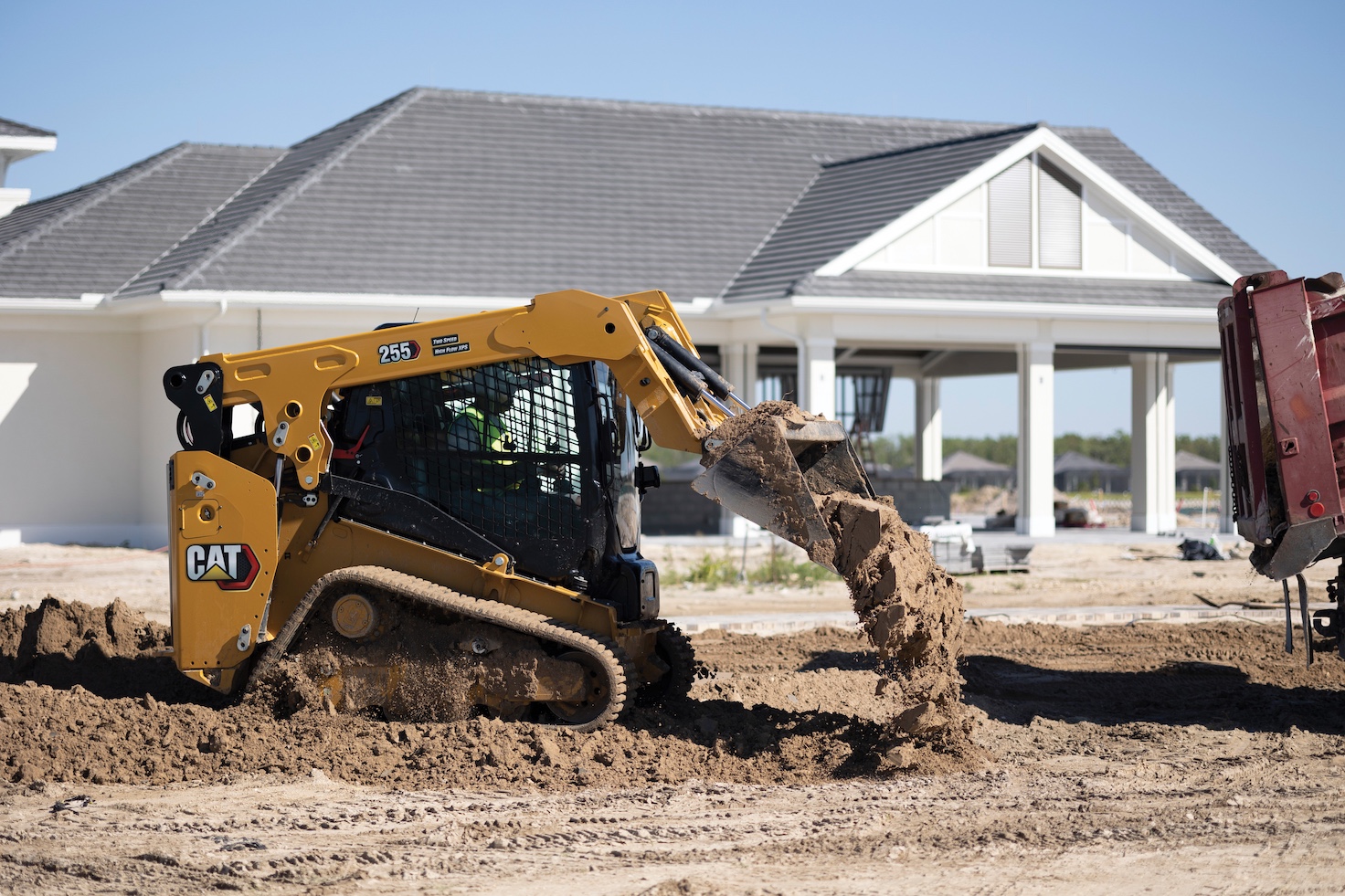
“As we transitioned to our next generation of Cat SSLs and CTLs, there were increases in machine power, breakout force and performance compared with previous models,” explained Bowers. Since contractors looked for more hydraulic work tools to increase machine utilization, auxiliary hydraulic flow designs have increased in power and flexibility as well.
“Our standard-flow machines can be upgraded to high flow with a software-enabled flash to accommodate use of high-flow attachments,” he added.
Mini excavator advanced attachments that have enjoyed more widespread use in European markets are now seeing an uptick in use on more land improvement projects. Worley pointed to the tilt-rotate systems that greatly expand the capability of standard work tools.
“By offering simultaneous 360-degree rotation and up to 40-degree tilting, tilt-rotate systems deliver significant cost savings by reducing the number of machines required and more effectively using ground staff at the site,” he said. “These systems can be used with a wide range of attachments like buckets, grapples, compactors and more, allowing for higher machine utilization and improved productivity.”
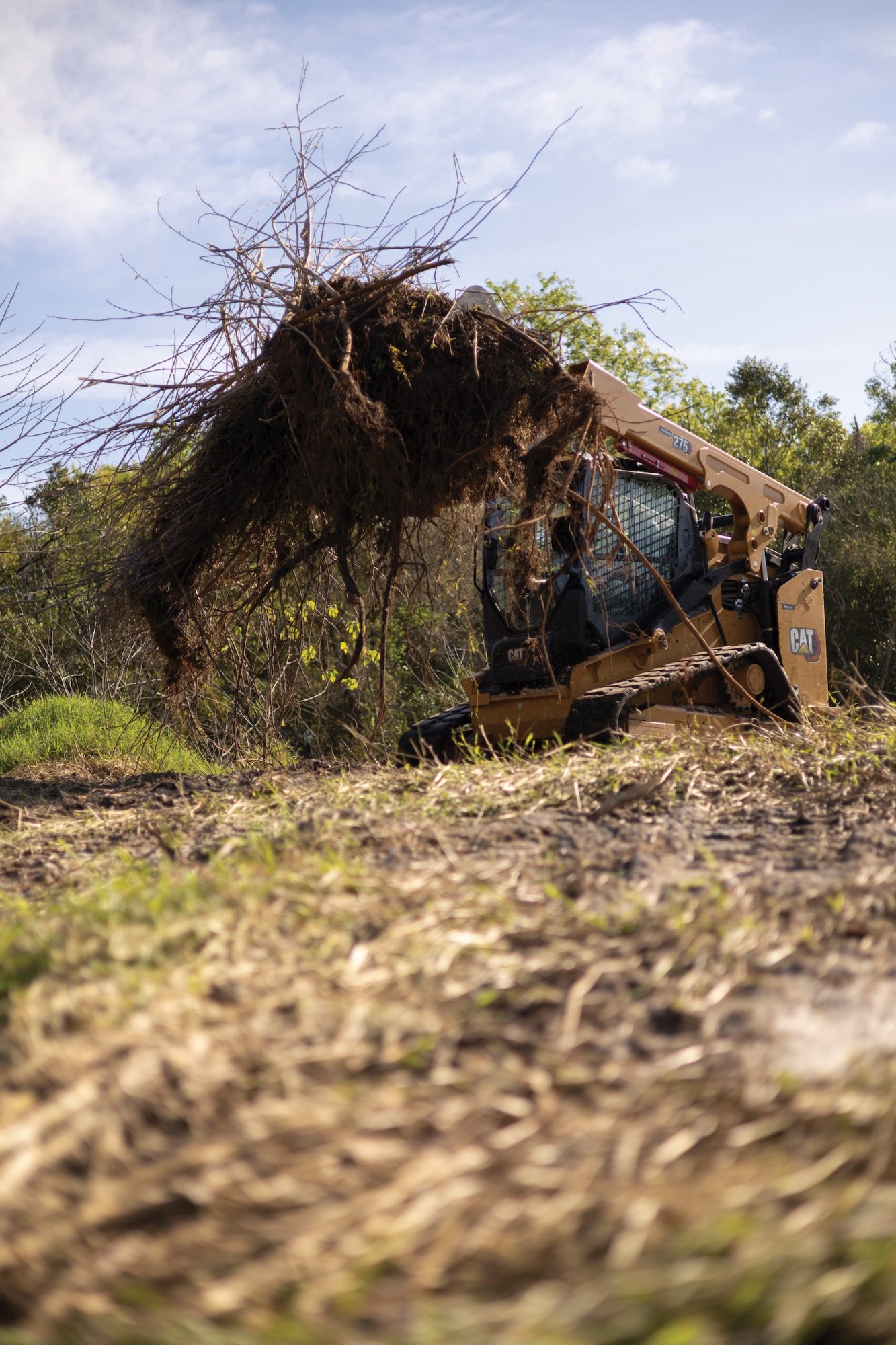
Compared to recent history, there is a much broader range of attachments available for compact machines. Ripper/scarifiers for CTLs allow contractors to maximize use of smaller equipment to break up, loosen or condition the surface layer of compacted soil, taking on a task commonly performed by dozers. They are also ideal for scarifying tree roots, fields and small- to medium-sized rocks. When paired with a dozer blade and grader blade attachments, they enhance grading in construction applications.
Grading beams, when combined with grade technologies and tilt-rotate systems deliver precise grading and leveling capabilities. These systems provide down pressure to effectively compact material for a quality surface finish. “This can effectively replace the need for larger graders in certain smaller applications,” offered Worley.
It’s not just the breadth of work tool attachments available that increases machine flexibility and productivity. It’s the ease in which the attachments can be switched. More “smart” attachment designs are available in which the machine automatically recognizes the type of tool attached and changes the joystick arrangement for using that specific tool.
“It just makes it easier for the operator to quickly change attachments without sacrificing productivity,” said Bowers.
Advanced Technology
Attachments aren’t the only feature getting smarter for compact equipment. Machine design and the integration of advanced technologies are also expanding the versatility and increasing performance.
“We are not introducing technology for technology’s sake,” mentioned Bowers. “OEMs are building stackable technology that grow with the contractor’s need.”
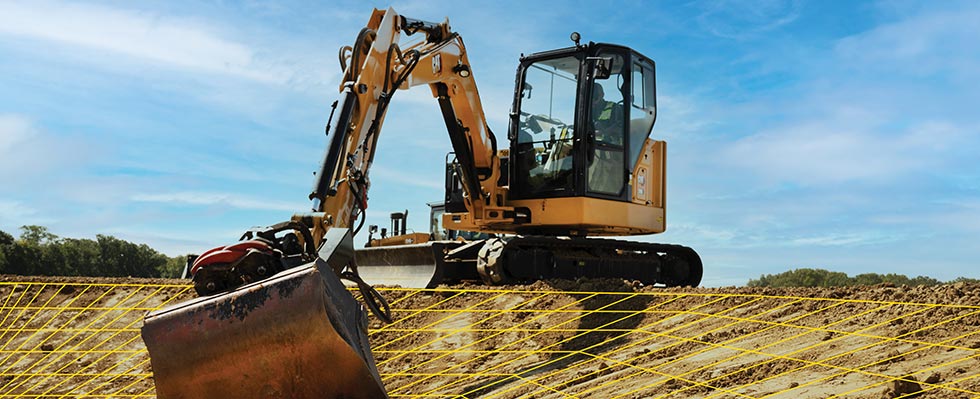
Specific to mini excavators, many come standard with an option for an entry-level grading systems that provide the operator with indicators to where the bucket is versus target grade. This type of system enables the ability to program a flat grade or slope, which is ideal for digging footings, septic systems, foundations, slope work and other similar applications.
For contractors requiring the next step in grading automatics, original equipment manufacturers (OEMs) offer upgrades that give the user the ability to create, manage and grade simple to complex designs with accuracy to exact specifications.
Improving efficiency at the site, these compact machines can be equipped with laser catchers to reference a laser transmitter, giving customers a consistent reference point across the site. It reduces the requirement for manual grade checking by the operator or site workers.
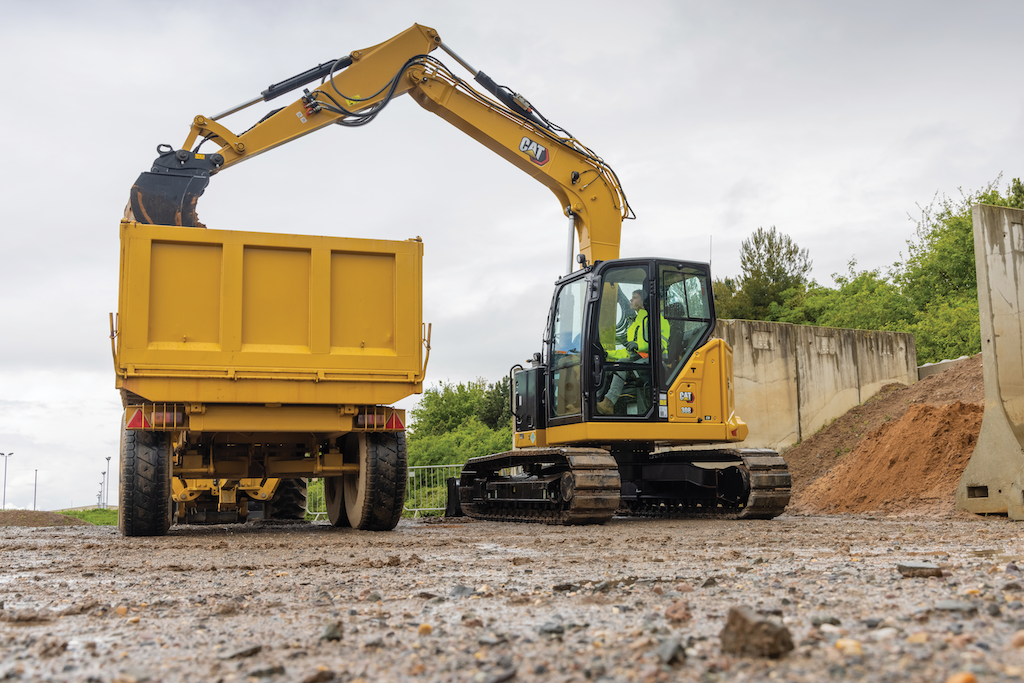
And with contractors working on more congested sites in urban areas, mini excavator technology enables operators to constrain machine motion within preset boundaries, allowing for more efficient work around structures.
Ceiling limiters help to avoid overhead obstacles, while floor limitations help protect underground fiber-optic cables and utilities.
Finally, operators can set wall limits to protect structures in front of the excavator.
Site Safety
As safety at the jobsite is paramount, OEMs continually work to advance safety in their machine designs and through adaptation of emerging technologies.
“First and foremost, we want all workers at the site to go home safe every day,” said Worley.
“Secondly, there is a financial aspect of having an accident that reaches far beyond the event itself. There’s project downtime, time to train another worker — if the contractor is large enough to have a replacement — and insurance to consider. The financial costs are many times higher than the event itself.”
Today, machine upgrades consider operator visibility improvements with cab designs, and some type of camera system — especially rear cameras — are commonly standard on compact equipment. Seatbelt indicators help foremen know that operators are properly buckled up when the machine is operating.
Emerging safety technologies such as collision mitigation systems and collision warning systems are now being offered by OEMs on larger compact equipment models to take the next step to mitigate risk and manage safety at the jobsite.
“We are now offering Cat Detect – Collision Mitigation System as an operator assist feature to enhance situational awareness when reversing the machine,” explained Worley.
“The system’s intelligent sensor array provides reverse collision warnings, detects people, inhibits motion and enables automatic emergency braking.”
Advancements in safety. Increased use of integrated technologies. Expanded machine versatility through a wider range of work tools enabling one machine to do the job of many. These are but a few of the many reasons why compact pieces of equipment are increasingly becoming an indispensable part of the resource management and land improvement contractor’s fleet management strategy.
OUR DIGITAL PARTNERS