Why Worker Interaction Will Matter More Than Algorithmic Power
Investigating the impact of AI & construction safety
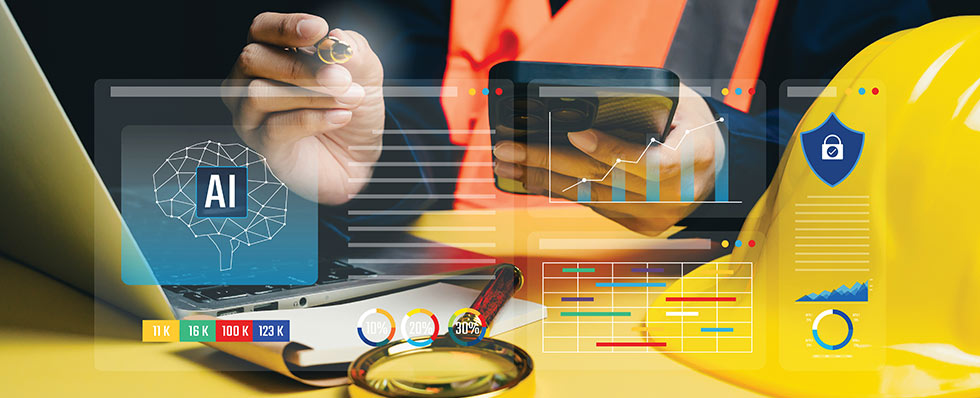
Artificial intelligence is entering construction safety at an accelerating pace. Computer-vision systems now detect missing personal protective equipment (PPE), predictive analytics platforms identify high-risk activities before work begins, and wearable technologies monitor environmental exposure and worker location in real time. These developments are often presented as the next major step forward in safety performance, shifting organizations from reactive incident response to predictive risk prevention. Recent industry research from Wolters Kluwer indicates that approximately 28% of environmental, health and safety (EHS) functions already use AI, while nearly half plan to invest in AI-enabled capabilities within the next year, signaling a rapid transition toward data-driven safety management.
Yet as AI deployment accelerates, a critical risk is emerging that receives far less attention: implementation failure. While industry conversations frequently focus on what AI systems can detect, much less discussion has centered on how frontline workers actually interact with these technologies in real operational environments. This human-technology interface may ultimately determine whether AI meaningfully improves safety outcomes or simply adds another layer of digital complexity to demanding workflows.
Technology Is Advancing Faster Than Implementation Strategy
Construction remains one of the most operationally complex industries, with constantly changing environments, multi-employer jobsites and highly mobile labor forces. In these conditions, safety technology cannot succeed on detection capability alone. Systems must function reliably within fast-paced workflows, be usable under real jobsite conditions — often with gloves, limited connectivity and time pressure — and generate alerts that are relevant, actionable and trusted.
In many early deployments, organizations have prioritized system capability over workforce interaction design. Multiple digital platforms inspections, permits, incident reporting, training systems and AI-enabled monitoring are often introduced simultaneously, each generating its own notifications and reporting requirements. Without careful integration, the result can be alert fatigue, reduced engagement and declining data quality, ultimately limiting the value of the technology itself. AI does not automatically improve safety performance; implementation quality determines whether it becomes an enabler or a distraction.
Workforce Trust Remains the Overlooked Success Factor
One of the most critical determinants of successful AI adoption is workforce acceptance. Camera-based monitoring systems, behavioral analytics and wearable tracking technologies can deliver valuable safety insights, but they also raise understandable concerns around privacy, fairness and how collected data will be used. Where workers perceive AI primarily as a monitoring tool rather than a safety support system, resistance or disengagement can emerge quickly.
Organizations that achieve stronger adoption typically take a workforce-centered approach. They communicate clearly that AI deployment is focused on hazard detection and injury prevention rather than productivity monitoring; involve frontline supervisors and worker representatives early in pilot programs; and provide transparency about how safety data is stored, governed and used. When workers see that tech supports safer working conditions, acceptance improves.
Avoiding the ‘False Sense of Safety’
Another emerging concern is the unintended belief that automated monitoring systems themselves represent the safety control. AI-based detection tools can identify hazards more consistently than traditional observation alone, but they do not eliminate the underlying risk. Overreliance on automated alerts can inadvertently weaken supervisory vigilance or shift attention away from planning, engineering controls and frontline leadership.
The most effective organizations position AI as a risk-identification capability rather than a replacement for professional judgment. Supervisors and safety leaders should be trained to treat AI alerts as one data source among many, while maintaining strong planning, supervision and operational safety oversight.
Measuring What Actually Matters
Many organizations evaluate AI systems based on detection volume how many PPE violations were identified, how many alerts were generated or how many hazards were logged. While these metrics demonstrate system activity, they do not necessarily indicate improved safety outcomes. More meaningful indicators include intervention response times, sustained reduction in exposure to high-risk conditions, workforce engagement with alerts and measurable behavioral changes over time. Organizations that measure these operational outcomes gain a clearer understanding of whether the technology is influencing real-world risk reduction rather than simply producing additional data.
The Evolving Role of Safety Leaders
As AI technologies expand across construction operations, the role of the safety professional is evolving. Safety leaders are increasingly involved in evaluating technology effectiveness, ensuring ethical deployment, supporting workforce engagement and integrating digital systems into operational workflows. Their involvement is critical in ensuring AI solutions are designed not only for detection accuracy but also for usability, workforce acceptance and operational practicality.
A Human-Centered Future for AI in Safety
AI has significant potential to strengthen safety management across construction and other high-risk industries, particularly through improved hazard visibility and earlier identification of emerging risks. However, the long-term impact of these technologies will depend less on algorithm sophistication and more on how effectively they are integrated into the human systems of work. Organizations that invest in workforce consultation, usability, training and governance alongside technology deployment are far more likely to achieve measurable safety improvements.
Over the next five years, AI capabilities are expected to become embedded across inspection platforms, permit-to-work systems, equipment monitoring and workforce safety applications. Organizations that develop human-centered implementation strategies today will be better positioned to realize the long-term safety benefits of these technologies.
As AI adoption accelerates, the key industry question is no longer whether the technology works. The more important question is whether organizations are designing AI safety systems around how people actually work, because ultimately, AI does not make jobsites safer on its own. How workers interact with AI determines whether its potential is realized.
What Safety Leaders Should Prioritize Now
- Pilot AI safety systems with frontline workforce involvement
- Measure behavioral and exposure outcomes, not just alert volume
- Integrate AI alerts into existing operational safety workflows
- Train supervisors on both the capabilities and limitations of AI monitoring
As AI becomes increasingly embedded across safety management systems, the firms that achieve the greatest safety gains will not be those that deploy the most advanced tech, but those that implement it in ways that align with how work is actually performed on-site.
OUR DIGITAL PARTNERS