Managing Risk in Pumping Systems
How package pump systems can improve project flow
Any construction project that involves one specialty embedded within another carries inherent risk. These risks often translate into schedule delays, cost overruns and coordination challenges. Pumping systems — whether for sewer and wastewater, stormwater, potable water or industrial process applications — are an example of this.
Understanding where risks arise, and how to manage them, can make the difference between a smooth project and a difficult one.
The Planning Phase
Pumping systems are rarely standalone items. In most cases they are indicated within civil plans and require coordination across multiple disciplines: civil, structural, mechanical, electrical, and control and communication.
As easily developable land becomes scarcer, projects increasingly require lift stations, stormwater pumps or water booster stations to make a site work. Most pump systems today are sophisticated, customized and interdependent, and many of their components have long lead times. That complexity increases the likelihood of scope gaps, requests for information (RFIs), redesigns and field changes — especially if these are not addressed early.
Traditionally, a civil engineer might design the pumping system, while fabrication and construction are left to others. This can introduce:
- Design details that are difficult or expensive to build
- Gaps between engineered intent and field execution
- Additional engineering time and cost during construction
One of the most effective ways to reduce pumping system risk is to engage a package pump system supplier — a firm that can design, fabricate, supply and support installation of the complete system.
In a package pumping system model, the supplier integrates system design into the overall scope and cost. The same entity that designs the system also prefabricates major components and supports construction and startup. For contractors, this can mean:
- Fewer coordination points
- Reduces design risk
- Clear accountability for performance
Requirements & Owner Preferences
There are hundreds of ways to design a pump system. Owners and operators often favor solutions they already understand and know how to maintain. Public owners often require specific brands or equipment standards based on long-term maintenance preferences.
The best way to design a pumping system is to design one the owner can operate confidently. Aligning the design with operator familiarity reduces commissioning risks, startup issues and post-construction callbacks.
Contractors can reduce their risk by confirming early that the selected pump system supplier can accommodate any required brands or materials without redesign or delays.
Flexibility at this stage prevents costly substitutions, or possibly delays, later in the project.
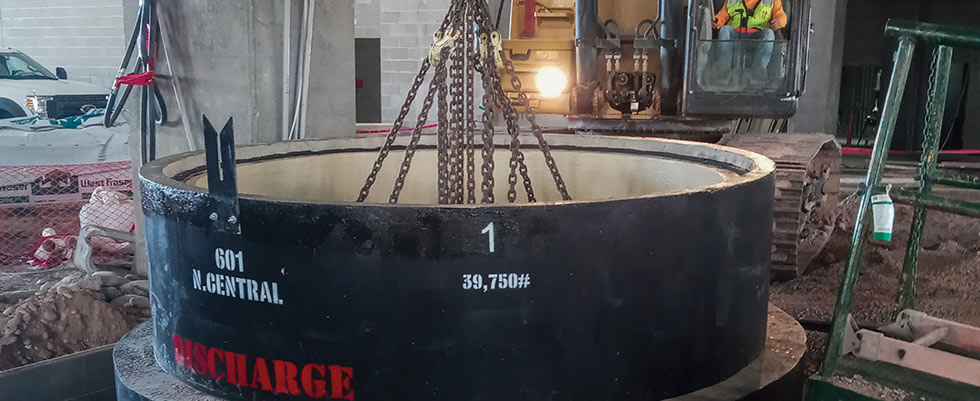
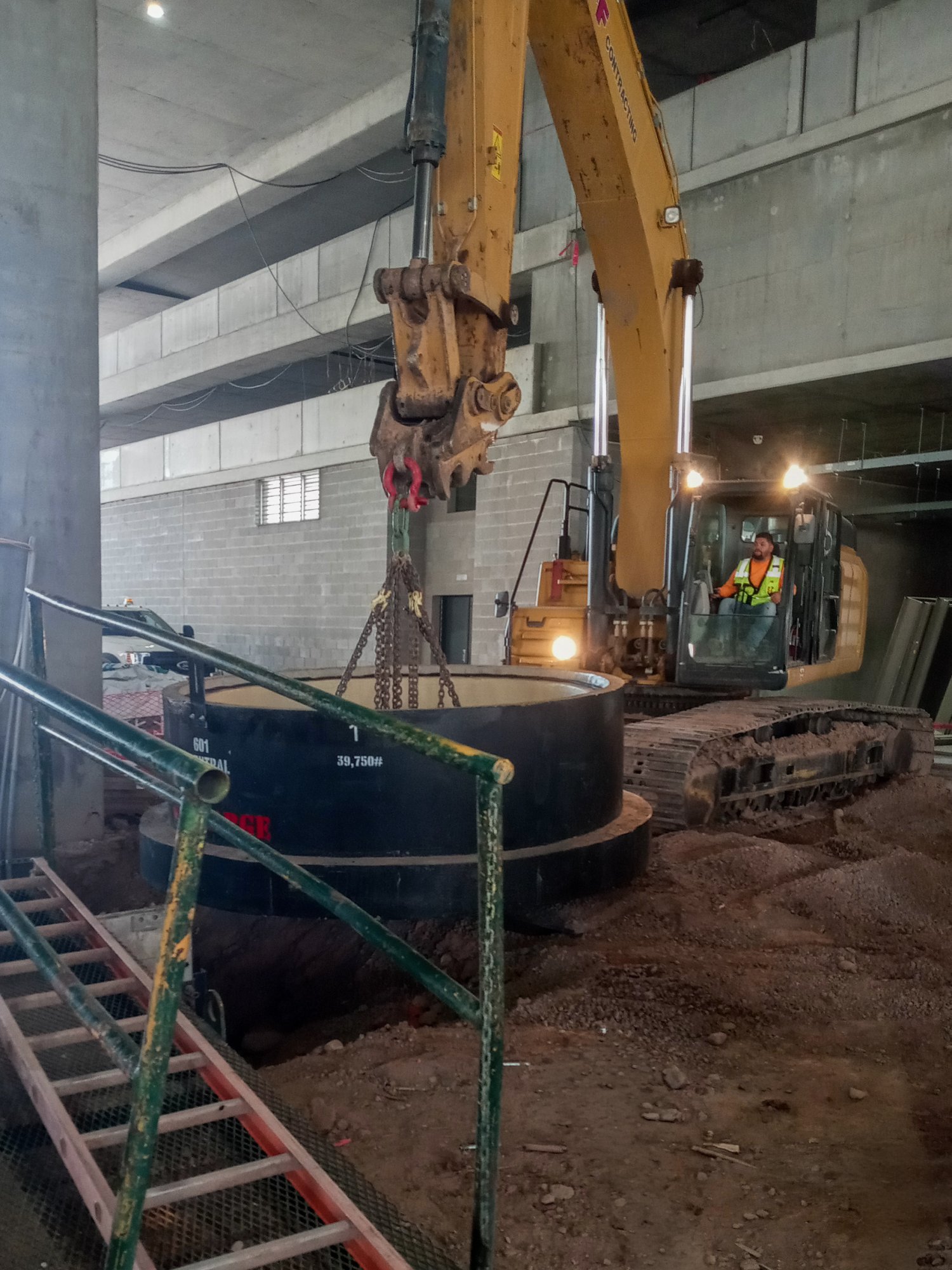
When a high-rise mixed-use development in the middle of Phoenix, Arizona, needed a lift station, a package pump manufacturer came to the rescue. The development included about 750 residential units, as well as commercial spaces and several pools. The lift station needed to be able to accommodate sewer from the residential units, as well as flush water from the pools and spa.
B&F Contracting Project Manager Frank Smerekanich said, “[The prefabricated pump system supplier] effectively managed all material requirements, ensuring full code compliance, while addressing the needs and concerns of on-site installation crews as well as investors and stakeholders.”
Coordination
Most projects rely on multiple disciplines working in close coordination, and when that coordination breaks down, it can create design conflicts, scheduling issues, rework, delays and added costs. Even small misalignments can quickly ripple across a project.
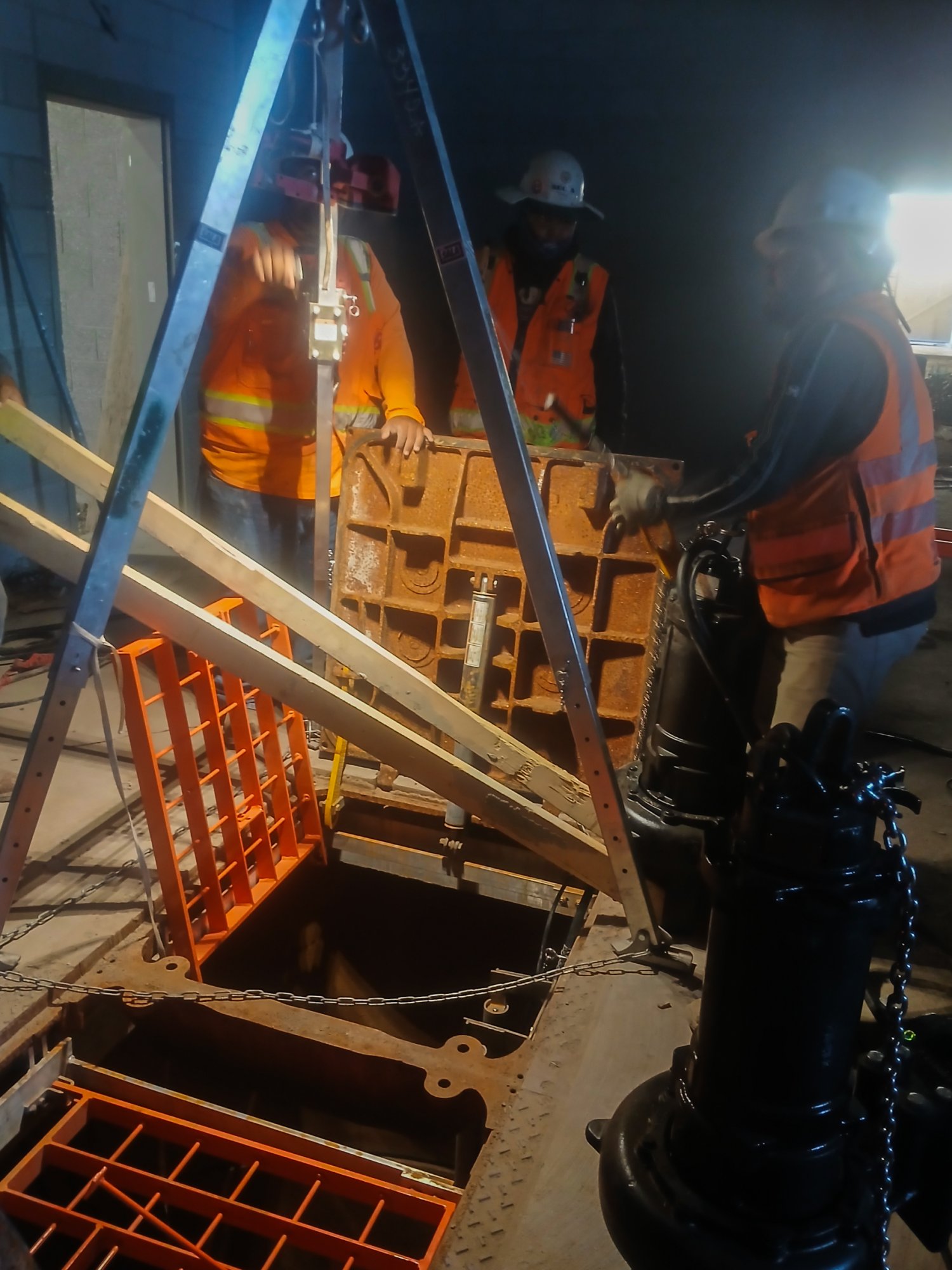
Packaging pump systems help reduce these risks by combining design, engineering, manufacturing and project management into a single-source solution. Rather than coordinating multiple vendors, the system is engineered, built and tested by one provider before arriving on-site as a preengineered, pretested unit.
This approach can streamline schedules, reduce field modifications and improve both accountability and project predictability.
In a recent Washington state project, a packaged pump system provider came up with a stormwater lift station solution for an apartment complex.
Kevin Chisholm, the pacific northwest general manager for Arbor MD — the general contractor on the project — said the project could have been a logistical nightmare, but instead it was one of the smoothest parts of the job. He said having a company handle the design and supply of the pump system under one roof, and providing a single-source approach made a difference in keeping things on track and on schedule.
“Bottom line: The system performed exactly as designed, the timeline held and our team wasn’t bogged downplaying middleman between a dozen different parties,” Chisholm said.
Installation
Inadequate planning, unclear installation requirements and field-built systems can create risks such as misalignment, incomplete connections, inspection failures, delays and added labor costs. These issues often force contractors to make costly field adjustments that impact schedules and project performance.
Package pump systems help reduce installation risk by arriving preengineered, assembled and factory-tested before delivery. By shifting much of the complexity off-site, these systems simplify installation, reduce field assembly and create a faster and more predictable construction process.
When a Wyoming military base was under construction for a new helicopter hangar and repair facility, a packaged pumping system was the short-term solution to accommodate a quick installation and the long-term solution for minimal impact on day-to-day operations on base.
“Having Romtec design the system and provide all required materials was a major coordination piece that mitigated many risks during field installations, and they were on-site during installation and startup to ensure the system was complete and functioning as intended,” said Travis Johnson, estimator and project manager for Mechanical Systems Inc. “Their prefabrication and packaging was a huge benefit in the field, and our crews greatly appreciated the effort and thought put into every step.”
Training & Documentation
Training and documentation can become major risks when systems are complex, poorly documented or difficult to operate. Incomplete manuals, staff turnover and limited training can lead to downtime, safety issues and premature equipment failure.
Package pump systems can help reduce these risks by providing standardized documentation, simplified controls and support from a single provider. Because the systems are engineered and manufactured as complete units, operators benefit from clearer operations and maintenance manuals, startup assistance and more consistent long-term maintenance practices.
At a sewer lift station project near Ketchikan, Alaska, the contractor needed not only a pump system but also a building. The contractor was able to find a company that was able to do both of those things, which helped keep the risks in check.
All pumping systems tie together multiple engineering discipline and are often among the longest lead items on a project. From concept through design approvals, prefabrication, delivery, construction, startup, testing training and documentation, pumping systems take an average of 1-2 years to fully execute.
For contractors focused on risk management, the strategy is clear: Start the pumping system process as early as possible.
If you want to mitigate risk across civil design and construction, don’t treat the pumping system as a late-stage detail. Treat it as a foundational element.
OUR DIGITAL PARTNERS