Why Partnering with IUPAT for Wallcovering Is a Smart Move for Project Managers
Why the Lowest Bid on Wallcovering Costs More: The Real Value of IUPAT-Certified Installers for Project Manager
When it comes time to select an installer for wallcovering, the hourly labor rate is often the first number decision-makers look at. But Project Managers who have worked continuously with the International Union of Painters and Allied Trades (IUPAT) certified wallcovering installers tell a different story. A story where the real measure of value isn’t the rate on the invoice, but the outcome on the wall, the schedule, and the bottom line.
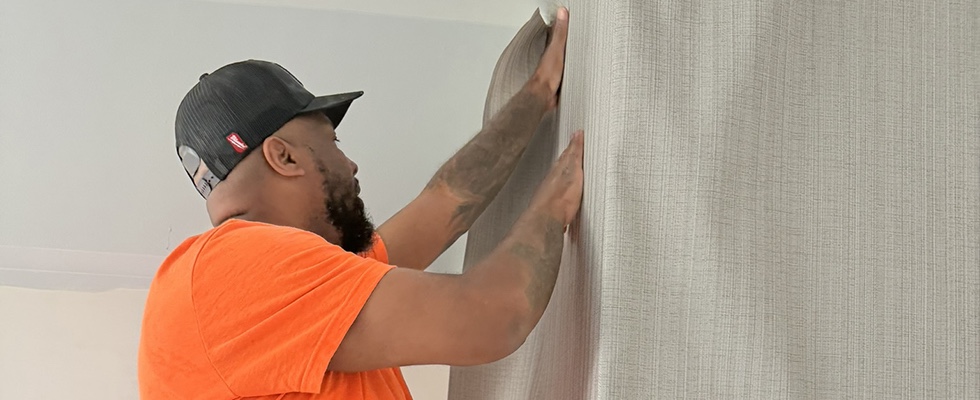
Wallcovering is an unforgiving trade. Seams have to disappear, patterns have to align across panels, and murals have to read as a single, seamless image rather than a series of stitched-together sheets. There’s very little room to hide a mistake, and very little tolerance for redoing it once a space is occupied. Wallcovering installation is a disciplined craft, not a commodity task. Getting a mural to align perfectly across multiple panels, matching complex patterns at every seam, and ensuring the material lies flat and adheres properly over time, all required a trained hand and a practiced eye. Certified IUPAT installers are trained specifically for this level of detail work. This expertise was developed through years of comprehensive IUPAT training and hands-on job site experience, and it shows in the outcomes. Project managers who’ve switched to IUPAT-certified crews report that callbacks for peeling, bubbling, seam separation, and pattern mismatches have all but disappeared. That’s not a minor convenience, it’s financial security. Every wallcovering callback means remobilizing a crew, which adds the cost of wages, revisiting finished, often occupied, spaces, which adds to prep times, and delaying the next phase of work, causing financial penalties for all stakeholders involved. In hospitality, healthcare, and corporate interiors, where wallcovering is often one of the last installations, it is also among the most expensive to repair. Eliminating that cycle isn’t just a quality win; it’s a schedule and budget win too.
Technical skill gets wallcovering hung correctly, and soft skills get a project finished on time. Wallcovering typically lands late in the finish schedule, right behind drywall, paint, millwork, and electrical trim, which means installers are constantly working around other crews’ timelines and last-minute changes. IUPAT wallcovering installers are frequently singled out for their ability to communicate clearly with general contractors, superintendents, and adjacent trades, flagging substrate issues or sequencing conflicts before they become disputes. On a busy job site with a dozen trades competing for the same space and timeline, that kind of professionalism is what keeps small issues from snowballing into schedule-threatening ones.
The same late position in the schedule also puts wallcovering squarely on the critical path when a timeline is tight. Wallcoverers are in the esthetics business and are often one of the first finishes guests, patients, and or tenants will actually see. Few things test a project manager’s patience like a compressed timeline: a hotel racing toward a grand opening, a retail buildout tied to a lease date, a healthcare facility with a hard commissioning deadline. IUPAT’s ability to quickly scale up trained wall-covering manpower, drawing from a deep regional labor pool, gives project managers a lever they simply don’t have with smaller, independent installation crews. When the schedule tightens, having a partner who can bring in qualified, certified hands, not just any hands, is the difference between hitting the date and missing it.
Scaling up a crew quickly only works if that crew also arrives ready to work safely. Jobsite safety isn’t optional, but managing it can consume enormous amounts of a project manager’s time. From verifying certifications, building safety plans, and confirming compliance documentation for every trade on site, including specialty finish work like wallcovering. Mandatory IUPAT safety training means that much of the work is already done. Certified installers arrive with training and documentation in place, covering everything from proper handling of adhesives and materials to working safely at height on scaffolds and lifts, to first aid training for the dangerous nature of working with razor blades and other sharp tools. These certifications simplify onboarding and reduce the administrative and liability burden on the project management team. It’s one less thing to chase, and one more layer of protection against incidents that could call a project entirely.
Put quality, coordination, scalability, and safety together, and a clearer financial picture starts to emerge. It’s true that IUPAT wallcovering labor typically carries a higher hourly rate than non-union alternatives. But project managers who evaluate the full picture, not just the invoice line, consistently point to a lower total cost of ownership with certified union installers. Fewer callbacks to fix peeling seams or misaligned patterns. Fewer disputes with adjacent trades over sequencing or damage. Less time spent supervising and re-checking work in progress. Wallcovering that holds up under years of daily wear rather than needing early replacement. When you add up the hidden costs of rework, delay, and oversight that come with lower-cost, less reliable installation, the union premium often pays for itself many times over, and does so without the “headaches” that erode margins on paper-thin bids. These paper-thin margins aren’t trickling down to front-line workers.
There’s a reputation element that many developers and owners need to consider as well. With increasing accountability to ESG commitments, labor sourcing isn’t just an operational decision; it’s a public one. Partnering with IUPAT for wallcovering work supports local job creation and skilled workforce development in the trades, giving project sponsors a tangible, verifiable way to demonstrate their commitment to the communities where they build. That’s a meaningful data point for stakeholders, investors, and community partners who are watching how, and with whom, a project chooses to build.
A relationship with IUPAT isn’t just about sourcing skilled hands for a single wallcovering package; it’s about building a dependable pipeline of craftsmanship, professionalism, safety, and scalability that pays dividends on every subsequent project. For end users who have felt the pain of failed installations, missed grand-opening dates, and jobsite friction, the case of partnering with certified union wallcovering installers isn’t theoretical. It’s operational, financial, and increasingly, reputational. The lowest bid rarely tells the whole story. The finish on the wall and the relationship behind it often do.