





Redevelopment is never a straight line. It demands patience, collaboration and a willingness to balance vision with viability. In Arizona, where rapid growth often meets aging infrastructure, redevelopment has become both an art and a discipline.
Across metro Phoenix, decades-old properties are being reimagined to meet the needs of modern tenants and communities. Population growth and infill opportunities are accelerating this shift, with Arizona ranking among the nation’s fastest-growing states in 2024, according to the U.S. Census Bureau. Redevelopment has become a key tool for cities seeking to revitalize underused land and align with sustainability goals.
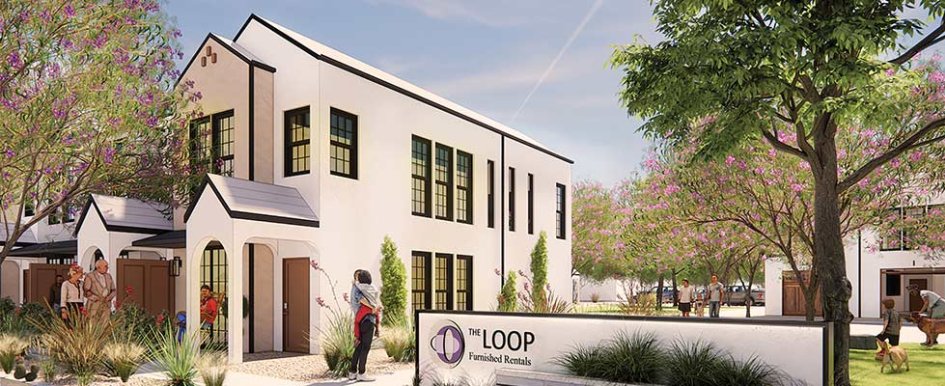
The Metropolitan, a major redevelopment of the former Metrocenter Mall, is an example of reinvestment in the Southwest. The project is transforming the long-vacant site into a mixed-use destination that blends housing, retail and public gathering spaces while reestablishing economic vitality in the city’s northwest corridor. It also reflects a broader trend taking shape in markets nationwide: converting aging retail centers into walkable, multiuse environments that meet evolving community and economic needs. Diversified Partners, serving as the retail developer in collaboration with Concord Wilshire Companies, is leading the creation of The Loop at The Metropolitan, an experience-driven retail and entertainment district designed to complement the residential components while promoting accessibility, mobility and long-term community value.
Finding the Right Balance
The Metropolitan’s development team faced the typical challenges that accompany large-scale urban redevelopment: access limitations, traffic circulation, permitting updates and coordination among multiple stakeholders. Each hurdle required creative problem-solving and consistent communication among design, construction and financial teams.
The city’s commitment to revitalizing the Metrocenter provided the foundation for collaboration. Through multiple design iterations, the project evolved into a balanced plan that honors the site’s historic legacy while integrating mixed-use density and community-driven amenities. The result is a walkable, amenity-rich environment that supports both economic and social vitality in northwest Phoenix.
According to the Urban Land Institute’s “What’s Old Is New: The Business Case for Urban Adaptive Reuse” report, adaptive reuse continues to gain traction in commercial real estate development as projects convert existing buildings into mixed-use or residential spaces to reduce risk and improve sustainability. The Metropolitan reflects this trend, repurposing a historic retail landmark into a mixed-use community that balances community revitalization with long-term economic value.
Lessons for Construction & Development Leaders
From a construction management perspective, redevelopment requires a different mindset than new builds. Unforeseen conditions, existing infrastructure and regulatory complexity mean contractors must remain flexible. Early coordination between design, engineering and municipal partners helps identify and mitigate risks before they impact schedules or budgets.
Redevelopment projects also benefit from maintaining open communication among all stakeholders, from architects and engineers to financial backers and city officials. Establishing shared expectations early can help prevent misalignment later in the process, particularly when unexpected site conditions arise.
Equally important is recognizing what a site is before determining what it could be. In the case of The Metropolitan, acknowledging the existing structure’s limitations and opportunities allowed the project team to design around its strengths instead of forcing a new identity. That approach proved vital for maintaining community buy-in and project feasibility.
According to the Associated Builders and Contractors’ Construction Backlog Indicator, the national backlog averaged 8.5 months in September 2025, illustrating how construction firms are adapting to longer project pipelines and emphasizing efficiency to maintain progress.
These conditions reinforce the need for disciplined cost tracking, transparent communication and proactive contingency planning across all phases of redevelopment.
Collaborative Development Model
The scale and complexity of The Metropolitan required a partnership structure built around specialized expertise. Diversified Partners serves as the retail developer alongside master developer Concord Wilshire Companies and residential builder Oakwood Homes, with each organization responsible for distinct but interdependent components. That structure allows each partner to focus on its strengths while maintaining a unified vision for design, infrastructure and community activation.
For Diversified Partners, collaboration extends beyond the development team. The firm works closely with the city of Phoenix and community stakeholders to align The Loop at The Metropolitan, the retail and entertainment plan, with the city’s broader goals for economic revitalization in the northwest corridor. This integrated model has become increasingly important in large-scale infill and redevelopment work, where multiple land uses, ownership groups and approval processes must move in tandem to maintain project momentum and financial feasibility.
Scaling Lessons Across Arizona & Beyond
Redevelopment and new construction activity continue to expand across Arizona, particularly in markets such as Laveen, Surprise, Glendale, Mesa, Chandler and Gilbert. Together, these regions represent roughly half a billion dollars in active commercial and mixed-use development statewide, reflecting steady demand and continued market growth.
To keep pace, many firms are expanding their internal capabilities by integrating investment, design and construction-management functions to streamline project delivery. Diversified Partners, for example, has adopted this model to enhance efficiency and foster earlier collaboration between disciplines, an approach increasingly common among midsize developers and contractors managing complex, multimarket portfolios.
Across the industry, this integrated structure mirrors a larger shift toward tighter coordination between design intent and financial performance. By combining in-house expertise with local partnerships, firms can maintain quality, reduce costs and align outcomes with long-term community goals.
A Broader Perspective
The national construction outlook continues to evolve as developers navigate tighter financing conditions, higher material costs and shifting market demand. According to the American Institute of Architects’ 2025 Consensus Construction Forecast, nonresidential building spending is expected to grow 1.7% in 2025 and 3.9% in 2026, signaling steady but moderate expansion across commercial sectors.
Meanwhile, the National Association of Realtors’ “Commercial Real Estate Market Insights” report notes that office vacancies remain elevated at roughly 14.1%, even as retail and industrial segments show greater resilience. These trends highlight the continued need for adaptive design and reuse strategies that balance long-term demand with evolving tenant expectations.
For redevelopment teams managing complex mixed-use projects, these data points reinforce the importance of building flexibility into design and delivery, aligning each phase with current market realities and future shifts in how people live, work and gather.
A Homegrown Outlook
Redevelopment is as much about stewardship as it is about construction. Each project offers the chance to enhance a city’s livability while maintaining its sense of place. For construction and business leaders, the takeaway is clear: Treat every redevelopment as a partnership, stay flexible through the process and remember that the value built today can strengthen a community for decades.
Across the country, similar efforts are reshaping cities. Whether revitalizing a historic retail corridor, a shuttered industrial site or a suburban infill property, the same fundamentals apply: early collaboration, adaptable planning and shared vision between public and private partners.