



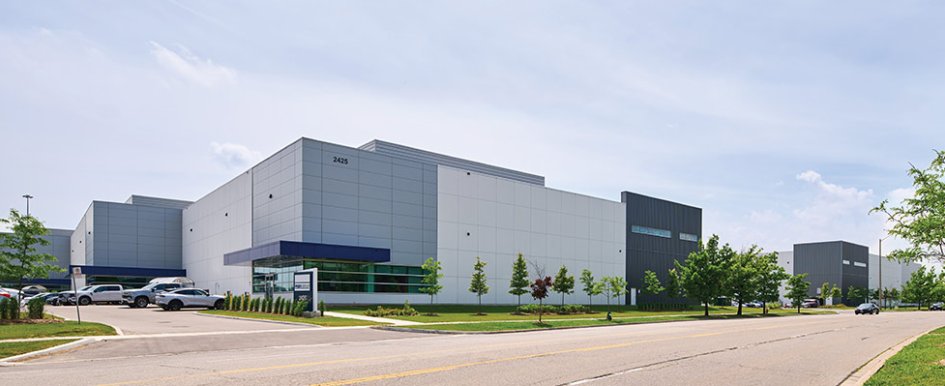


The rising cost of construction materials, labor shortages and heightened sustainability expectations are pressuring contractors to find building solutions that can do more with less. As construction professionals search for ways to streamline costs and simplify projects, one solution is steadily gaining ground: insulated metal panels (IMPs).
Unlike traditional multilayer wall assemblies that require sheathing, insulation, water, air and vapor barriers to be installed separately, IMPs integrate all these functions into a single, high-performing component. That all-in-one design can help reduce installation time and minimize on-site labor — without compromising performance or aesthetics.
Here’s a closer look at how IMPs reshape commercial construction by reducing complexity and unlocking real cost savings.
1 Panel, 4 Layers of Protection
IMPs consist of a high-performance insulating foam core sandwiched between two durable steel skins. But their simplicity belies their engineering sophistication.
Each panel offers four critical barriers: air, water, vapor and insulation. This multifunctional performance means one panel can replace multiple building layers traditionally installed by separate trades. With R-values up to 8.0 per inch, the panels also meet the most stringent energy codes without additional insulation.
Eliminating redundant layers not only cuts material costs; it also reduces the number of potential failure points introduced by multiple trades and materials — points where moisture can more easily intrude, increasing the risk of mold, mildew and long-term structural damage.
Faster Installations
Associated Builders and Contractors (ABC) predicted that construction spending will increase in 2026 in response to “presumed lower interest rates.” As the demand for commercial construction rises, contractors will be looking for ways to increase capacity.
IMPs streamline the building process, helping contractors complete projects faster. These prefabricated panels are designed to be installed in a single pass. This simplification of the construction process reduces the chance of scheduling conflicts and delays, making it easier to stay on track and meet project deadlines.
Time-lapse footage has shown that IMP installations can take about half the time of traditional multicomponent wall system installations. This increase in efficiency not only helps contractors manage more projects but also provides the opportunity to take on additional work without compromising quality. By reducing installation times, contractors can maximize their productivity, manage large workloads and increase their bottom line.
Energy Efficiency That Pays Off
With commercial buildings accounting for roughly 17% of U.S. energy consumption, operational costs are a key consideration in material selection. The continuous insulation of IMPs helps limit thermal bridging and maintain a more consistent indoor temperature, reducing heating and cooling costs throughout a building’s life.
These performance advantages also contribute to carbon reduction goals. By enhancing energy efficiency, IMPs help lower operational carbon emissions, the day-to-day emissions generated from building energy use. Reducing this ongoing carbon footprint is helpful to meet climate benchmarks set by both governments and private organizations.
Cost-Effective Freight
Transporting heavy precast concrete panels can be a significant expense due to their weight and the specialized equipment required for their delivery. IMPs are lightweight and easier to handle, leading to reduced freight costs.
The streamlined logistics associated with IMPs can lead to faster delivery times, minimizing potential delays and associated costs. By opting for IMPs, construction projects can achieve savings in freight expenses, contributing to the overall cost-effectiveness of the building process.
Long-Term Maintenance Savings
Durability is another area where IMPs shine. The panels are designed to remain air- and water-tight for decades, even in harsh climates. Their robust construction minimizes the risk of water damage or degradation, all of which contribute to costly repairs in traditional assemblies.
Unlike traditional concrete walls, IMPs can come with comprehensive weather-tight warranties, helping ensure that buildings stay energy-efficient and free from water intrusion for years. Additionally, IMPs provide paint warranties. In contrast, concrete walls may require repainting two to three times over the course of 20 years, adding to long-term maintenance costs and effort.
IMPs can be manufactured with special coatings that withstand heavy sanitation and cleaning, making them well-suited for high-performance environments like industrial facilities, health care centers and cold storage warehouses.
Cost Comparison: Installed & Operational
Compared to traditional tilt-up and precast concrete, IMP wall systems have been shown to reduce installed costs by up to 25% in the U.S., with even greater savings possible in high-labor-cost regions. Beyond initial savings, reduced energy consumption and maintenance needs provide an attractive return on investment over time.
IMPs in Action
For the Meadowvale Exchange industrial development, IMPs helped to reduce construction costs by providing an efficient alternative to traditional multicomponent wall systems. By utilizing IMPs, the construction process was expedited, eliminating the need for multiple trades and allowing for faster building close-in and dry-in. This reduced labor costs and helped lower delays typically experienced with scheduling multiple trades. The panels’ high thermal efficiency contributed to lower heating and cooling costs, helping to minimize long-term energy expenses.
At the Port of Seattle’s Terminal 106, the decision to use IMPs for the second-floor construction resulted in substantial cost savings. According to Nadia Azarova, a senior architect leading the project, “To make it all tilt-up (concrete) would be more expensive structurally and more complicated for construction logistics.”
The panels’ lightweight design made them easier to handle and install, reducing labor and transportation costs. Additionally, IMPs provided excellent thermal efficiency, meeting Seattle’s stringent building codes while lowering energy costs for heating and cooling. The speed of installation, combined with the thermal efficiency and minimal structural requirements compared to traditional concrete, helped streamline construction and keep the project within budget.
A Simpler Path to Performance
For general contractors navigating complex commercial projects, IMPs offer a streamlined path to building envelopes that are efficient and cost-effective. Whether working under tight schedules, lean labor conditions or budget constraints, IMPs provide the performance of multiple components in one easy-to-install solution.
The future of construction will favor systems that simplify without compromise. IMPs can be a strategic advantage for contractors because they can save time and reduce costs.