
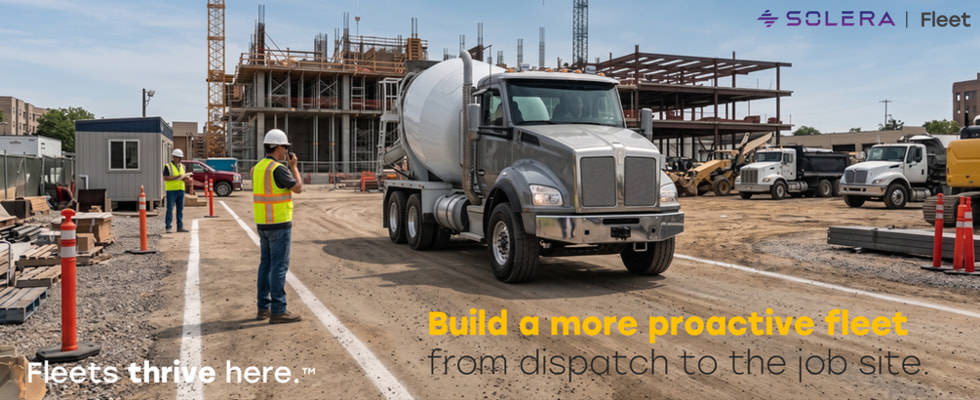
Build a More Proactive Construction Fleet
Connect safety, routing & fleet intelligence to keep construction & ready-mix operations moving.
A construction delivery is more than a trip from one location to another. It is a commitment that connects dispatchers, drivers, vehicles and the people waiting at the job site. For ready-mix operations, the relationship between the batch plant and the delivery destination makes that coordination especially important. Keeping everyone informed requires more than knowing where a truck was a few minutes ago. It requires a practical way to turn fleet information into the next decision.
That is the opportunity behind a more proactive fleet culture. Instead of treating safety, routing and vehicle visibility as separate conversations, construction and ready-mix businesses can approach them as connected operational priorities. Solera Fleet Solutions brings together fleet intelligence to help teams strengthen driver protection, improve planning and make better use of their vehicles and assets. The goal is not simply to collect more information. It is to help people act on information that matters.
Start with a clearer operational picture
Consider the questions your team needs to answer throughout a working day. Where are the vehicles needed for the next delivery? What has changed since the original plan? Which drivers need support? Which assets are available, and which deserve closer attention? When each answer requires a separate phone call or manual check, it becomes harder to build a shared understanding of the operation. A useful starting point is to identify where those information gaps occur most often.
Solera’s GPS tracking solutions provide visibility into the location and status of trucks and trailers. Fleet telematics and performance analytics help managers understand activity and identify trends across drivers, vehicles, routes, and operational processes. For a construction fleet, that information can support more informed discussions about daily priorities. Rather than asking teams to react to an isolated update, managers can use a broader view to decide where attention is needed and what should happen next.
Plan deliveries with the job site in mind
Ready-mix deliveries depend on coordination between production, transport, and the receiving site. A routing plan therefore needs to serve the operation, not just draw a line between two points. Dispatchers need a practical way to prepare for deliveries and respond when conditions change. A proactive approach starts by considering how routing decisions affect the people managing the day, the drivers carrying out the plan and the customers waiting for materials.
Solera’s routing and planning tools are designed to help fleets create more efficient routes, while dispatch management software supports the people coordinating fleet movements. These capabilities give construction and ready-mix businesses a foundation for improving the planning process. The next step is operational: Establish how dispatchers will review changes, communicate updates and determine when a plan needs attention. Technology is most useful when the team understands how to apply it consistently.
For fleet leaders, the right conversation is not simply whether a route looks efficient on screen. It is whether the planning process helps dispatch and drivers work from clear, usable information. During a solution discussion, bring examples of the delivery challenges your business wants to address. Explain where coordination becomes difficult and which decisions depend on timely updates. That creates a more meaningful starting point than evaluating individual features without connecting them to everyday work.
Make safety a daily practice
Construction and ready-mix safety deserves attention both on the road and around the job site. The industry’s uneven surfaces and crowded operating environments make context important when reviewing an event. A proactive safety culture does not wait for a serious incident to start a conversation. It gives managers and drivers a structured way to understand risk, reinforce good decisions, and address behaviors that need improvement.
Solera’s SmartDrive combines video-based safety, advanced analytics, telematics and compliance capabilities. Video can provide context for reviewing driving events and can help exonerate drivers when the evidence supports them. That context matters: An event should be understood, not merely recorded. For managers, a more complete picture can support a more focused conversation. For drivers, a fair review process can help make safety technology a source of support rather than simply another layer of oversight.
Driver coaching helps turn those observations into practical action. Solera offers personalized digital training that drivers can access by smartphone. Construction fleet leaders can use a coaching approach to keep conversations specific and constructive: Explain the behavior, discuss the circumstances and agree on what should change. Recognizing safe choices belongs in that process, too. The aim is to make safety an ongoing part of how the fleet operates, rather than a topic reserved for incident reviews.
Keep vehicle health in the conversation
A proactive operation also needs visibility into vehicle condition. Routing and dispatch decisions are more useful when managers understand which vehicles may need attention. Solera offers continuous fault monitoring and vehicle diagnostics data to support maintenance management. These capabilities help teams bring vehicle health into their operational discussions instead of treating maintenance as a separate concern. The practical question is how information about a vehicle becomes a clear action for the people responsible for it.
Start by defining who reviews vehicle alerts, how concerns are escalated, and how maintenance information reaches dispatch. Those are process decisions, not promises that software alone can fulfill. Fleet intelligence can help surface information, but people still need clear responsibilities and an agreed response. A consistent review routine gives teams a way to decide what requires immediate attention, what needs follow-up, and how vehicle availability should inform the next operating plan.
Give drivers a clearer workflow
Drivers are central to any construction fleet improvement effort. A plan that adds complexity to their day can work against the outcomes managers want to achieve. Solera’s driver workflow capabilities are designed to reduce paper and deliver timely information. Its digital vehicle inspection reporting tools offer an alternative to clipboard-based processes, while centralized driver document management supports easier retrieval of records. These are practical areas to explore when looking for opportunities to simplify daily work.
Compliance also belongs in the conversation, but technology should support an informed process rather than replace it. Solera’s portfolio includes electronic logging and hours-of-service tools, license monitoring and driver file management. The appropriate combination depends on the fleet’s operation and requirements. During evaluation, confirm which capabilities fit your vehicles, drivers and workflows. Avoid assuming that every feature is necessary for every fleet or that adopting a tool removes the need for operational oversight.
Turn information into a management routine
Dashboards are useful only when they lead to a decision. Solera’s performance and analytics capabilities help fleets see trends that affect drivers, vehicles, routes, and operational processes. For construction and ready-mix leaders, a productive starting point is to choose a small set of questions the team wants to answer consistently. Where does dispatch need better visibility? Which safety behaviors deserve coaching? Where could vehicle condition or asset activity change the day’s priorities?
Use those questions to shape a repeatable review process. Bring operations, safety, maintenance and drivers into the discussion so that the information reflects how work actually happens. Agree on who owns the next action and how the team will follow up. Then review whether the process is producing useful decisions. This keeps the focus on operational improvement instead of treating the amount of data collected as a measure of success.
Build around your next operational priority
Moving from reactive management to a proactive fleet culture does not require starting with every available capability. It requires a clear priority and a realistic understanding of how people, processes, and technology will work together. A fleet may begin with stronger safety coaching, more informed delivery planning, or better visibility into vehicles and assets. The best starting point is the one that addresses a meaningful operational need and gives the team a practical way to act.
Solera Fleet Solutions offers construction and ready-mix businesses a way to explore those priorities through connected fleet intelligence. Bring your delivery challenges, safety goals and workflow questions to the conversation. Identify the capabilities that fit your operation, confirm the implementation requirements and define what progress should look like. A more proactive fleet begins with clearer information — and a team prepared to use it.
Ready to build a more proactive construction fleet? Explore Solera’s construction and ready-mix solutions and start a conversation about your fleet’s needs.
Explore construction and ready-mix solutions
