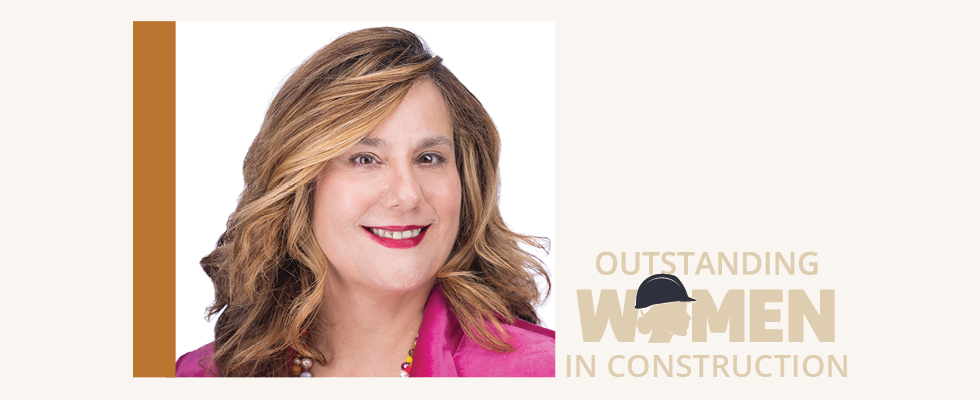
Sonya Bohmann, Executive Director at Construction Industry Alliance for Suicide Prevention
Outstanding Women in Construction 2026 finalist

Sonya Bohmann, Construction Industry Alliance for Suicide Prevention (CIASP) executive director, worked in light construction for more than a decade, and what she loved most is that every day was different — a new project, problem or experience.
“It never felt boring,” she said.
A pivotal moment in Bohmann’s career came when she heard someone speak about mental health in the construction sector. She thought it would be her dream job to help others in construction navigate mental health challenges. Three years later, she was presented with the opportunity to do just that.
Bohmann transitioned to a role that she calls her dream job. “I get to provide resources, support and education for our industry around mental health/wellness and suicide prevention,” she said.
CIASP is a 501(c)(3) focused on construction mental wellness and suicide prevention. Initially founded in response to the 2016 U.S. Centers for Disease Control and Prevention study ranking construction as the No. 1 industry for deaths by suicide, CIASP is working toward a zero-suicide industry by uniting, educating and supporting the construction community.
Through CIASP, Bohmann is raising awareness about the risk of suicide within the construction industry — driven by a combination of workplace, cultural and personal factors — and providing suicide prevention resources and tools to create a zero-suicide industry.
According to the organization, “Many construction professionals also are veterans who bring valuable leadership and mission-focused experience to the industry but may face an increased risk for suicide compared to the general population.”
“The nature of construction work also can contribute to increased risk. Frequent travel between jobsites, long or irregular hours, and time away from family can lead to isolation, disrupted sleep, and physical and mental exhaustion,” said CIASP.
CIASP notes that “continued progress will require a sustained commitment to reducing workplace injuries, strengthening jobsite culture, addressing bullying, expanding access to mental health resources, and ensuring every worker knows that asking for help is a sign of strength.”
As for barriers she sees women still facing in the construction industry, Bohmann said what she once heard a welder named Holly Thomas say: “It is hard to be what you can’t see. We need more women to loudly and proudly proclaim they are a woman in construction and create a path for others to follow.”
If Bohmann could give her younger self one piece of advice about succeeding in the construction industry, it would be this: “You belong, and you are capable. You are just as capable as any man, and you deserve the promotion and the raise.”
A misconception Bohmann would like to debunk is that construction is a male-dominated industry. “We are in a male-populated industry,” she said. “There are women in all facets of this industry, and we need to recognize that more. There may be more men, but women are making their mark every day in big and small ways.”
Bohmann notes that professional mentorships matter when it comes to learning and advancing in construction. “Find someone who is doing what you want to do and follow them on socials, reach out, ask the questions,” she said “They will want to help.”
Bohmann’s advice to industry leaders to better support and retain women in construction is to give women a seat at the table. “We bring valuable perspectives,” she said. “We solve problems differently. We create and hold spaces differently. That perspective will be invaluable as we are losing more workers each day who age out of the industry. To find, retain and recruit more women will help adjust that labor shortage.”
As for her own efforts in fostering the next generation, she does that by providing education on mental health and suicide prevention.
“If we can have these conversations early about strong mental health and wellness, teaching woman to look out for themselves and those they care about, that is how can create more helpers,” she said.
“If we go upstream and educate leaders on psychologically safe workspaces, that is how we can change the industry.”
Bohmann said that outside of work, she is “a wife of 30 years, a mom of two great kids. I am a volunteer and advocate for mental health education — especially in our schools. I love to spend time around water, the beach, the pool, a lake — any water makes me happy.
OUR DIGITAL PARTNERS