How US Erectors Built a Culture of Acceptance & Connection
Looking beyond the girders
US Erectors was founded in 2004 in Pleasant Hill, a suburb of Des Moines, Iowa, but the idea didn’t start on a jobsite. At the time, CEO Brad Churchill was working for another steel erector in the Des Moines market, building someone else’s vision while quietly starting to question what he wanted his own to look like. That answer began to take shape in an unexpected place.
During a class at his church, Churchill found himself thinking differently about what was possible. “Through prayer,” he said, “I knew I wanted to own the company that would build the next phase of our church.” That was the starting moment of what became US Erectors.
Today, the workforce of US Erectors ranges between 75-125 ironworkers and operating engineers. The company’s workload is concentrated in data centers, warehousing and schools, and the majority of their work is with repeat clients and joint ventures with general contractors. Churchill notes that building and working with churches is “definitely my passion.”
Churchill is proud of the culture he has built. As he puts it, “We put our team members first.” He believes that no person is more or less important than another.
“It takes a combination of leadership, estimating, project management, supervision, craft workers and office staff to make a project successful,” he said. “If one of those areas is lagging, it affects the others. If everyone knows their importance and does their job correctly, the entire team wins.”
Benefits & Advocacy
As a union employer, the company provides a defined benefits package but goes beyond it in many ways, offering “vacation pay, paid holidays, clothing and boot allowances, and a bonus program that includes everyone who draws a paycheck.”
Churchill has always advocated for the physical aspect of safety and the compliance tasks, and he believed in getting workers home safely at the end of the shift. But when he and his family experienced the unthinkable, it made the softer side of safety — the human aspects — even more crucial to him.
Churchill’s leadership and advocacy around mental health did not develop in isolation. It was shaped by a loss that fundamentally changed how he sees his role as both a leader and a father. In May 2017, Churchill and his family lost his 16-year-old son, Trevor, to suicide. In the years that followed, Churchill has spoken openly about how that loss forced him to confront conversations that are often avoided — both at home and on the jobsite — and ultimately reshaped the way he connects with the people around him.
Strengthening Relationships
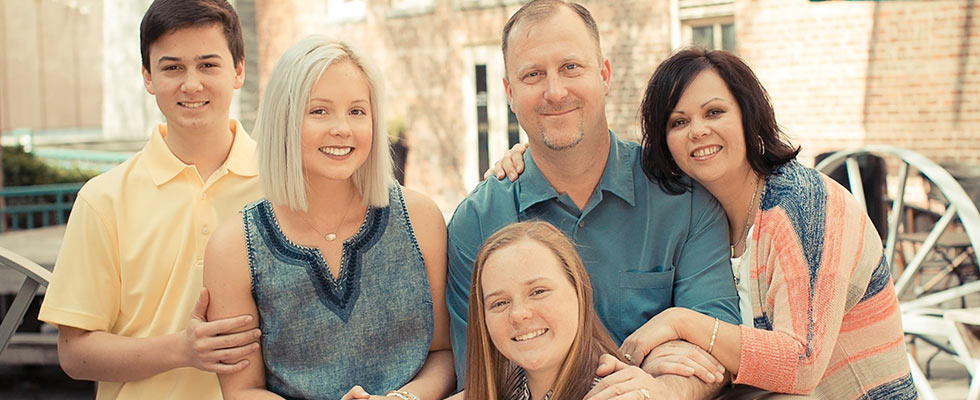
Churchill shared how their faith and support from pastors and friends got him, his wife, Tammy, and their now-grown daughters, Madie and Ellie, through the hard times after Trevor’s passing. The Churchills recognized that the peer support they received from their church community was at the core of their healing. He said this inspired the need to build tighter connections with his crew members to help prevent any other family experiencing a loss like theirs.
Churchill became very intentional in developing closer personal relationships with his employees. He took time to better understand what was going on in their personal lives that could explain changes in attitude, lack of energy or motivation, or other behavioral changes being observed on worksites. He became more direct in reaching out in private conversations with individuals, and he grew more comfortable offering relational, emotional and financial support. His open-door policy became a revolving door because the more he cared, the more they shared with him.
Providing Resources for Employee Well-Being
These experiences led Churchill to become more involved in leadership with his local Ironworkers union and as a trustee for the Health & Welfare Fund. Churchill was instrumental in instituting an expanded employee assistance program for the members and their dependent family members. As a trustee, he took time to attend learning opportunities sponsored by the International Foundation of Employee Benefit Plans.
Churchill took on the task of improving the education provided for all union members in his local union. He educated all employees so they knew how to share health plan information with their spouses and dependent children.
Churchill has been an influential leader helping the Ironworkers International Union and the Ironworkers Management Progressive Action Cooperative Trust (IMPACT) address workplace mental health and suicide prevention. In 2020, Churchill informed the ironworkers joint labor management committee that he’d be willing to share his family’s story as a way of helping bring attention to the construction industry’s high rate of suicide.
US Erectors’ commitment to building a strong people-first culture aligns with the work of SAFE Project (Stop the Addiction Fatality Epidemic), a national nonprofit focused on preventing overdose and supporting mental health and recovery in workplaces and communities. SAFE Project partners with employers to help create environments where safety extends beyond the jobsite and into the well-being of the people who make the work possible.
US Erectors adopted policies, procedures and practices to promote prevention and recovery from mental health and substance use challenges. Notable examples include the following:
- Signed the SAFE Project #NoShame Pledge
- Presented toolbox talks on substance use prevention focused not on punitive consequences but on the availability of help and resources
- Shared information about 12-step and non-12-step recovery programs
- Approved flexible leaves to pursue treatment and recovery
- Distributed drug deactivation and disposal products
- Provided opioid safety education about alternatives to opioids for pain management
- Stocked naloxone/Narcan in workplaces and at worksites
- Offered opioid-sparing surgical procedures (or nonopioid alternatives for persons in recovery)
- Codispensed naloxone when plan members were prescribed opioids for injuries, medical and dental procedures
Mental Health Matters at US Erectors
Churchill encourages fellow leaders to visibly and vocally support workplace mental health. “The key to my connections stems from this vulnerability in openly talking about mental health, suicide and grief. It opens the door for others to talk about it as well.”
He continued, “I have had many employees discuss very personal issues and hurts with me that normally you would never bring up to your boss. But because I am open about my own pain that I have experienced and the loss I have been through, the tone has been set for others to discuss the same issues and more.”
“Life is not easy at all, regardless of your social or economic status. Everyone has troubles, fears and tragedies that they must deal with.” Churchill encourages leaders to go first and openly share the struggles and pain in their lives. This clears the path for others to walk down, and removes stigma, shame and blame.
“The culture we strive to create at US Erectors is built on accepting one another without judgment and helping each other regardless of the issue,” he said. “This teamwork and trust creates the culture leading to an open dialogue and understanding.”
OUR DIGITAL PARTNERS