Improving Construction Safety Requires Focus on Temporary Workers
Don’t forget to address PPE & safety with contract laborers
Employers in the construction industry face increased safety challenges as jobsites and work crews change daily. Temporary workers are vital to the construction industry, yet they are often overlooked when it comes to safety. Maintaining a consistent commitment to safety and ongoing training for all site workers is essential to completing projects without injury.
The Construction & Temporary Labor Connection
According to the Occupational Safety and Health Administration’s (OSHA) Temporary Worker Initiative Series, in 2024, over 2.7 million temporary workers were employed, with a significant amount of those in the construction sector hired through staffing agencies. Additionally, the Federal Reserve recently noted that current economic conditions may be increasing demand for contract labor.
Research suggests that these temporary workers are more likely to be injured on the job than their full-time counterparts. With a rising number of temporary workers and increasing likelihood of higher risk of injury, OSHA was prompted to release its 15th bulletin on what is known as the Temporary Worker Initiative (TWI). The TWI provides guidance to employers on safety responsibilities and highlights specific issues involving temporary worker safety.
The TWI bulletin 15, Construction Industry Employment, addresses regulations and best practices around the utilization of contingent, contract and temporary labor on construction jobsites.
Construction Safety Training Ownership Shouldn’t Be a Mystery
The safety of temporary workers on jobsites is frequently neglected, largely because it is not always clear who holds responsibility for their safety training. Often, this uncertainty occurs when combining temporary workers and subcontracted companies that have different resources and responsibilities. The ambiguity in oversight can result in important safety measures being missed, as each party may assume the other is handling the necessary training and guidance. OSHA TWI Bulletin 15 addresses how these distinctions influence the safety and training of temporary workers on construction sites, underscoring the need for clear assignment of responsibilities.
What Role Does a Staffing Agency Play in Construction Worker Safety?
A staffing agency focused on temporary worker safety will ask the subcontractor or general contractor questions to ensure the most qualified workers are identified for the project; such as:
- What is the desired level of experience?
- What qualifications or credentials are necessary (such as an OSHA 10 or 30)?
- What are the physical requirements of the job being done?
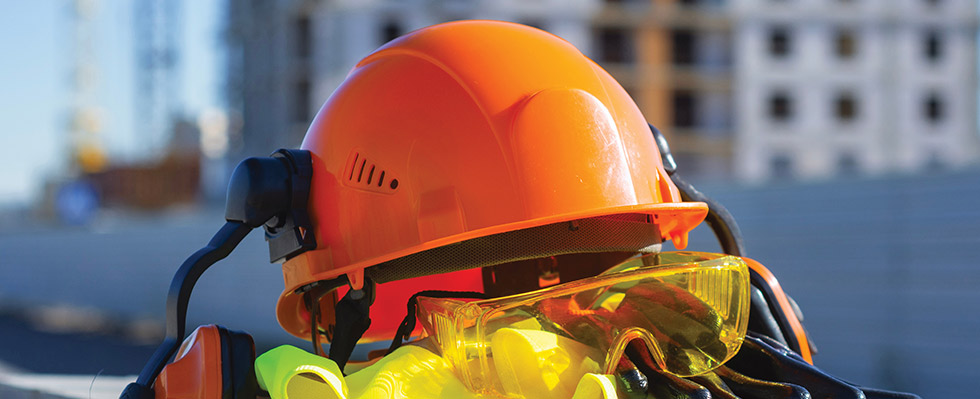
Prior to sending temporary workers to a jobsite, it is critical to discuss what personal protective equipment (PPE) is required. It is important to outline which party is providing the PPE so temporary workers are effectively protected while performing job duties. In some instances, host employers may be best suited to provide the PPE. In other situations, the staffing agency may provide the items necessary for the job. No matter the circumstances, this should be agreed upon before beginning work so temporary workers are effectively protected from day one on the jobsite.
If a staffing agency is providing PPE, the type and requirements needed should be relayed to the agency so that the correct equipment can be procured and distributed. The host employer is most aware of the hazards and should select what is needed. Providing the model and manufacturer of the equipment can be an advantage. Even if the staffing agency is providing the PPE, the host employer is still ultimately responsible for ensuring that the PPE is adequate, worn correctly and in good condition. OSHA’s recent final rule on construction PPE still holds true for contingent labor on sizing, fit and adequacy.
Lack of training is a common complaint among temporary workers and a roadblock to performing the job safely. Companies can avoid training pitfalls by discussing training responsibilities with staffing providers. OSHA’s TWI indicates joint responsibility for safety training. Staffing agencies are responsible for a general awareness level of training and safety practices. However, host employers are in the best position to provide site-specific safety training, as they best understand the hazards and specific requirements of the jobsite. Delineating who will provide what training at the onset of a staffing partnership is key to ensuring temporary workers are receiving comprehensive training on all topics applicable to the jobsite.
What Role Does the Host Employer Play in Temporary Worker Safety?
The host employer is in the best position and is generally responsible for providing the oversight, supervision and direction of the work being done. The host should routinely conduct worksite assessments, inspections and ensure that all protection is utilized and in place. This can mean that general site safety training, as well as any related specific training (like scaffolding), is best performed by the host. Safety rules vary from jobsite to jobsite. Setting a temporary worker up for safety success in these environments includes training on specific site protocols like emergency action plans, confined spaces, welding, fall protection, trenching and any stop-work authority that exists. The host employer should coordinate with the staffing company to ensure that all topics are being effectively trained in either the temporary staffing onboarding or the host employer’s onboarding.
Even experienced construction workers need time to adjust to the nuances of a new jobsite. Making certain that all workers have access to adequate safety training keeps everyone on the same page without putting the crew at unnecessary risk. All training should be documented, and records of training should be shared between both host and staffing provider upon request.
Nonnegotiable safety rules and handling of safety violations should be discussed with the staffing agency prior to employee placement to prevent miscommunication. This keeps lines of safety communication open and allows proper documentation for both employers in the process. Clear expectations and consistency across all labor types foster a culture where all employees feel valued, included and able to speak up about safety issues or solutions.
According to Aerotek’s Job Seeker Survey, 89% of respondents indicated a preference for companies that focus on employee safety. An active safety culture keeps workers returning, focused on the task at hand and looking out for their coworkers.
Construction involves many components, including temporary workers. Early coordination with staffing companies on PPE, training and safety rules helps ensure temporary worker success. This approach supports safety commitment across all teams and reduces injuries.
OUR DIGITAL PARTNERS