Improving Outcomes Through Digital Innovation
Connected jobsite strategies are helping contractors control cost, reduce risk & scale performance
Rising input costs, persistent labor constraints and tighter project timelines are forcing construction leaders to rethink how work gets done. For many, the answer isn’t a single technology investment — it’s the deliberate integration of digital capabilities across the jobsite.
What’s emerging is a connected worksite model: a system where equipment, tools, environments and people continuously generate data at scale to improve real-time decision-making. Rather than reacting to issues after they occur, contractors can identify inefficiencies earlier, reduce variability and operate with precision.
This shift is already underway, and it’s reshaping how leading contractors manage fleets, control jobsite access, protect materials and ensure quality outcomes. And increasingly, these capabilities are accessible to organizations of all sizes.
Below are four core digital swimlanes defining the connected worksite today — and the operational gains they unlock.
1. Fleet Intelligence: Turning Equipment Data Into Decisions
Modern fleet management is no longer about visibility alone — it’s about optimization.
Telematics-enabled equipment, paired with cloud-based platforms, provides continuous insight into location, utilization and performance. This allows contractors to move from assumptions to data-backed decisions about asset deployment.
The impact is immediate:
- Utilization clarity helps identify underused owned equipment and idle rentals, enabling rightsizing of fleets and more disciplined capital allocation.
- Location tracking reduces time lost searching for assets across large or multisite projects.
- Usage-based maintenance replaces calendar-driven servicing, lowering maintenance costs while reducing unplanned downtime.
- Early diagnostics can surface emerging issues before they disrupt production.
For contractors managing mixed fleets, the ability to aggregate this data into a single environment is critical. Fragmented visibility limits the value of telematics; unified visibility turns it into a strategic advantage.
2. Tool Accountability: Reducing Loss & Increasing Productivity
Tool loss and mismanagement remain persistent sources of cost leakage on jobsites. At the same time, the time
spent locating tools directly impacts crew productivity.
Connected tool ecosystems are addressing both challenges by introducing real-time accountability.
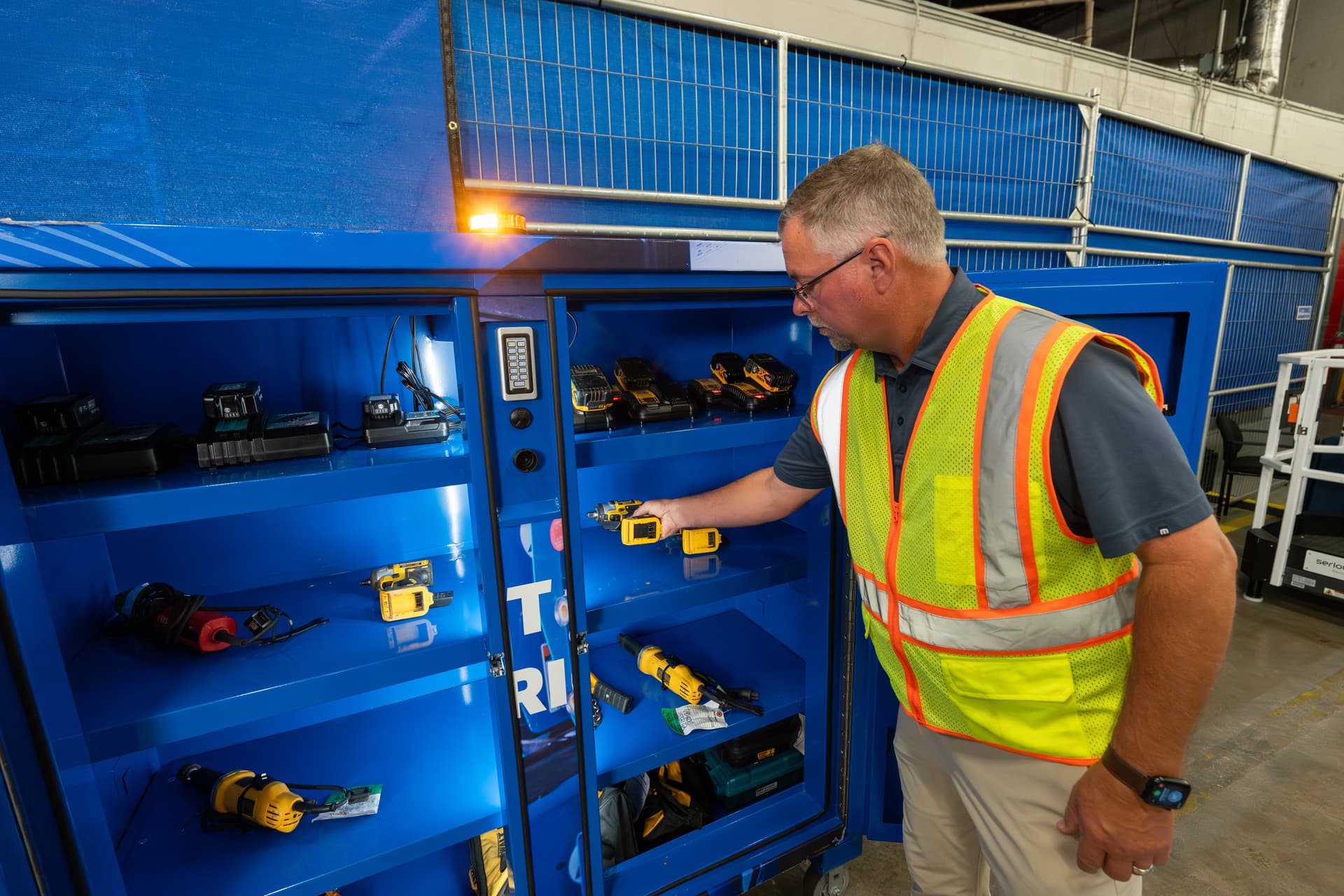
Bluetooth-enabled tracking, whether embedded by manufacturers or added via tags, allows tools to be located dynamically across the jobsite. When paired with Internet of Things (IoT)-enabled storage systems, distribution and tracking can be automated entirely. These systems create a closed-loop process:
- Workers access tools using badge credentials or secure PINs.
- Each transaction is automatically logged, eliminating manual tracking.
- Tools report location data as they move throughout the site.
The result is not just fewer lost tools but also a measurable reduction in nonproductive time, freeing crews to focus on execution.
3. Environmental Intelligence: Managing Conditions Without Manual Oversight
Monitoring jobsite conditions has traditionally required manual checks — often after-hours or across wide geographic areas. This introduces labor inefficiencies and increases the risk of missed thresholds.
Wireless environmental sensors are changing that model.
By continuously transmitting temperature, humidity and other environmental data to centralized dashboards, these systems enable teams to monitor sites remotely and respond immediately when conditions fall outside defined parameters.
Key applications include:
- Concrete curing — Real-time temperature monitoring ensures quality control and provides documented compliance data.
- Temporary heating — Remote visibility allows teams to reduce unnecessary fuel consumption and operating costs while maintaining required conditions.
- Sensitive materials — Continuous monitoring protects against environmental damage.
When paired with remote-control capabilities for heating or climate systems, contractors can not only monitor conditions but also actively manage them without setting foot on-site.
4. Access Control: Strengthening Safety & Accountability
Controlling who can operate equipment is fundamental to both safety and risk management. Traditional approaches — such as shared PINs — often break down in practice, limiting their effectiveness.
Digitally managed access control systems offer a more scalable solution.
With cloud-based platforms, contractors can assign equipment permissions based on operator roles and credentials. Badge-based authentication eliminates the need for shared PINs and ensures that only authorized personnel can start specific machines.
Beyond control, these systems generate a detailed usage record:
- Who operated the equipment
- When it was used
- How long it was active
- This level of visibility strengthens accountability, supports incident investigations and reinforces a culture of safety across the jobsite.
From Adoption to Advantage
Digital transformation in construction is often framed as a large-scale, all-or-nothing initiative. In practice, the most effective approaches are incremental and outcome focused.
Each of these swimlanes — fleet intelligence, tool accountability, environmental monitoring and access control — can deliver measurable gains on its own. Together, they create a compounding effect: Improved visibility leads to better decisions, which drive greater efficiency, safety and cost control.
For contractors navigating tighter margins and increasing project complexity, that shift is becoming less optional.
The connected jobsite is no longer just about technology adoption: It’s about operational discipline enabled by data. And for companies willing to build that foundation, the payoff is sustained performance and resilience in an increasingly demanding environment.
OUR DIGITAL PARTNERS